Remove this Banner Ad

Why do workers vote Liberal?

🥰 Love BigFooty? Join now for free.

You must be joking. At every turn, the Liberals have done all in their power to contain wages. They always mount a campaign in the FWC. They've stopped penalty rates in many industries and want to broaden them. They have effectively neutered collective bargaining and introduced employment contracts that rob individuals of bargaining power. I mean they regard containing wages as a badge of honour, while allowing their plutocratic mates' incomes to explode.

what you're referring to doesnt create the majority of wage pressure in australia. two things do:

1) competition for scare workers forcing wages up
2) overtime due to labor scarcity

the fact we have <4% unemployment yet we dont have people leaving jobs for better options is why wages are flat (and i suspect a hell of a lot of under employment)

reality is most jobs are not managed by the govt tools these days
 
what you're referring to doesnt create the majority of wage pressure in australia. two things do:

1) competition for scare workers forcing wages up
2) overtime due to labor scarcity

the fact we have <4% unemployment yet we dont have people leaving jobs for better options is why wages are flat (and i suspect a hell of a lot of under employment)

reality is most jobs are not managed by the govt tools these days
Sorry Ned but you're wrong in a macro sense.
 
Sorry Ned but you're wrong in a macro sense.

wage pressure isnt coming any more from award changes. most workers earn above award, and wage increases occur when competition for labour drives this price up

you can blame the govt, because thats nice and easy, but its wrong

the issue is a much more complicated one - and its frankly a sign our employment situation isnt a healthy one

if people are not leaving jobs for more coin, its because they arent paying more or the jobs available arent any better or they are scared to move

none of these is a good thing
 
wage pressure isnt coming any more from award changes. most workers earn above award, and wage increases occur when competition for labour drives this price up

you can blame the govt, because thats nice and easy, but its wrong

the issue is a much more complicated one - and its frankly a sign our employment situation isnt a healthy one

if people are not leaving jobs for more coin, its because they arent paying more or the jobs available arent any better or they are scared to move

none of these is a good thing
If you look at the larger picture you will see the govt has been both overtly and covertly applying pressure to contain wages and conditions over a long time. They've bragged about how effective their containment measures have been.

Cormann described "downward flexibility on the rate of wage growth as a deliberate design feature of our economic architecture"

If you believe it's mainly a Labor and ACTU view that govt policies are a major component in reducing take-home pay and conditions, in addition to other factors such as casualisation, ceasing allowances, turning a blind eye to underpayment et al read the views of industrial relations lawyer Josh Bornstein. The views of economists such as Prof Quiggin, Saul Eastlake (who was a Liberal Govt advisor), Alan Kohler, Michael Pascoe. And think tanks like the Grattan Institute and The Australia Institute.
 

Log in to remove this Banner Ad

If you look at the larger picture you will see the govt has been both overtly and covertly applying pressure to contain wages and conditions over a long time. They've bragged about how effective their containment measures have been.

Cormann described "downward flexibility on the rate of wage growth as a deliberate design feature of our economic architecture"

If you believe it's mainly a Labor and ACTU view that govt policies are a major component in reducing take-home pay and conditions, in addition to other factors such as casualisation, ceasing allowances, turning a blind eye to underpayment et al read the views of industrial relations lawyer Josh Bornstein. The views of economists such as Prof Quiggin, Saul Eastlake (who was a Liberal Govt advisor), Alan Kohler, Michael Pascoe. And think tanks like the Grattan Institute and The Australia Institute.

Okay, then name the specific government policy that is causing wage deflation, and not the vibe - the actual legislation/regulation
 
Okay, then name the specific government policy that is causing wage deflation, and not the vibe - the actual legislation/regulation
With due respect, I don't think you grasp the significance of the stated objective of the Liberals to keep downward pressure on wages and how they've achieved that aim. Via casualisation, which effectively neutered workers' negotiation powers; reducing workers' wages through such measures as removing penalty rates and loadings: fighting every case for wage increases at the FWC and loading the FWC so it's full of conservative sympathisers; doing nada about underpayment of wages and theft of superannuation; exhorted business to control wages and allowances et al.

You have this myopia that doesn't appear to allow you to see past legislation thereby missing the big picture.

So if you aren't of a mind to read the list of professional peeps and organisations I've listed or the RBA governor Philip Lowe's repeated requests for caps on public sector wages increases to be removed and calling for wage rises of 3 percent in both the public and private sectors being ignored by the Liberals. Or the then finance minister Mathias Cormann " attacking Labor’s “living wage” proposal with the standard line that higher wages would mean higher unemployment". Then perhaps you'll read the transcripts of wage case hearings particularly the submissions on behalf of the Liberals who have fought every wage claim. Perhaps then you'll get the significance of the Liberal modus operandi which is that low wage growth is “a deliberate design feature of our economic architecture”

I'm not suggesting it's the only factor, but a material one and had a progressive party been in power during the long period of the reactionaries there would now be a genuine living wage.
 
With due respect, I don't think you grasp the significance of the stated objective of the Liberals to keep downward pressure on wages and how they've achieved that aim. Via casualisation, which effectively neutered workers' negotiation powers; reducing workers' wages through such measures as removing penalty rates and loadings: fighting every case for wage increases at the FWC and loading the FWC so it's full of conservative sympathisers; doing nada about underpayment of wages and theft of superannuation; exhorted business to control wages and allowances et al.

You have this myopia that doesn't appear to allow you to see past legislation thereby missing the big picture.

So if you aren't of a mind to read the list of professional peeps and organisations I've listed or the RBA governor Philip Lowe's repeated requests for caps on public sector wages increases to be removed and calling for wage rises of 3 percent in both the public and private sectors being ignored by the Liberals. Or the then finance minister Mathias Cormann " attacking Labor’s “living wage” proposal with the standard line that higher wages would mean higher unemployment". Then perhaps you'll read the transcripts of wage case hearings particularly the submissions on behalf of the Liberals who have fought every wage claim. Perhaps then you'll get the significance of the Liberal modus operandi which is that low wage growth is “a deliberate design feature of our economic architecture”

I'm not suggesting it's the only factor, but a material one and had a progressive party been in power during the long period of the reactionaries there would now be a genuine living wage.

We had wage growth with all of those things. It was low, but it was happening. For it to go into reverse it means something new has happened.

You also have your brain stuck in the 1970s. The public service isn't holding back wage inflation.

You need to look at public servants to understand why.

Firstly they are not a dominant part of the economy. Just 16% of the workforce is employed by govt, and a big chunk of this workforce is in healthcare, policing, and defence - all of which got big OT numbers in recent years thanks to covid.

Next there is the issue of control, and I have an old story for you. Both the Bank of Japan and the Bank of England tried to fight the hedge funds in the 80's over the value of the Yen and the Pound. Both failed miserably, because for the first time, funds has access to more cash than the reserve banks did.

With labour, it's the same thing. Govt pegs only work as long as either the demand for labour or the supply of it is not greater than their mechanisms. Right now, as I keep telling you, something is wrong with employment.

Most people think of unemployment as what is called cyclical unemployment. However there are three other types - institutional (caused by govt policy), frictional (people moving jobs), and structural (tech change making jobs redundant)

Now frictional unemployment is normally around 1-2% depending upon the times. And we are dealing still with structural unemployment thanks to the recent exit of the auto industry, so this means our cyclical unemployment is very low.

Normally this kind of supply crunch means wage explosions, as employers fight for scare labour resources. And we saw this happen with construction (part of the reason for the Probuild collapse). So why no wage demand?

Let's look at the numbers more deeply.

The underemployment rate is falling - not as much as unemployment, but not far off. The participation rate is steady, so people are not leaving the workforce. Yet the number of unemployed is 30% less than a year ago. Again, this indicates we should have labour shortages forcing up wages.

So the next option is psychological. It took 10 years for Hawke/Keating to break the back of inflation. The reason wasn't mechanical - it was mental. People were used to seeing 7-10% inflation, and they built inflation expectations into their lives. Even if they didn't pay more for goods, they thought they needed a pay rise because it was inevitable that goods cost more. And the same with companies, they kept raising the cost of their goods and services because they assumed wages and inputs would always rise.

We have had low inflation now for two generations. You grew up without ever seeing the world of high inflation. So people are not tuned to expect it any more.

Then we come back to job security. As we saw after the GFC, even when things were booming, wages were not. People still were mentally scarred from the recession, and they remained in protection mode. Imo the same is happening now. Mentally we know there is a labour shortage, but we are still too scared to push for a pay rise

People see the numbers and focus on that for economics, but they always forget economics is a social science. Its about people and how they react - not legislation and govt controlling the invisible hand


Finally there is an important thing to remember. Even if we have our current labour scarcity, do firms have the capacity to pay. A lot don't, and the people working in these firms would know how tight things are. Reforms over the past decade mean most fat has been removed from staffing, so there was no option but to retain/bring abck their people. It doesn't mean they have the ability to pay wage increases.

We have had record low bankruptcy rates over the past couple of years, thanks to govt keeping firms alive. The RBA and most forecasters are.predicting 2022 will be a sea of red.
 
You are an interesting unit, Flando, I'll say that for you. Not only declared Labor leaning but a member no less, yet a declared Liberal wet too. Can't say I've ever encountered a Labor member who is a Liberal too. Some combination that.

You arrive in the thread with some narrow views like asking about legislative measures relating to workers' rights being harmed and when your post is dealt with by pointing to that aspect as being only part of a much bigger picture and pointing to some reading for you authored by peeps who work in the industrial relations landscape. As well as a list of economists and places where you can find commentary on modern conservatism as it applies to industrial relations. In addition to the views of Cormann who has had a major hand in the real changes to the industrial relations landscape. To transcripts from recent FWC hearings that have provided insight into modern conservative attacks on workers. In addition to commentary from the RBA governor who called for significant wages increases while giving his reasons for it which include showing why workers are worse off by a margin and expressing concern about the disparity between the wealthy and the poor which has grown disproportionally. The upshot has been you have either dismissed those matters or thrown in some deprecative words then moved on to something else.

Most of your historical fulmination raises matters which either have little or no bearing on the current day industrial landscape or have gaps you could drive a truck through including your predilection with the public service. Or you raise matters that have not been disputed. For example, no one has suggested there hasn't been marginal wage growth, what has been put is it isn't commensurate with the cost of living increases. Something the RBA governor has put clearly.

I wasn't around in the '70s so I rely on peeps who work in the industrial relations/economic fields and who understand modern conservatism to form my views. Oh, and having peeps close to me who have been adversely affected by losing penalty rates and the power associated with collective bargaining that has been removed by modern conservatism - read the practical application of neo-liberalism.
 
You are an interesting unit, Flando, I'll say that for you. Not only declared Labor leaning but a member no less, yet a declared Liberal wet too. Can't say I've ever encountered a Labor member who is a Liberal too. Some combination that.

You arrive in the thread with some narrow views like asking about legislative measures relating to workers' rights being harmed and when your post is dealt with by pointing to that aspect as being only part of a much bigger picture and pointing to some reading for you authored by peeps who work in the industrial relations landscape. As well as a list of economists and places where you can find commentary on modern conservatism as it applies to industrial relations. In addition to the views of Cormann who has had a major hand in the real changes to the industrial relations landscape. To transcripts from recent FWC hearings that have provided insight into modern conservative attacks on workers. In addition to commentary from the RBA governor who called for significant wages increases while giving his reasons for it which include showing why workers are worse off by a margin and expressing concern about the disparity between the wealthy and the poor which has grown disproportionally. The upshot has been you have either dismissed those matters or thrown in some deprecative words then moved on to something else.

Most of your historical fulmination raises matters which either have little or no bearing on the current day industrial landscape or have gaps you could drive a truck through including your predilection with the public service. Or you raise matters that have not been disputed. For example, no one has suggested there hasn't been marginal wage growth, what has been put is it isn't commensurate with the cost of living increases. Something the RBA governor has put clearly.

I wasn't around in the '70s so I rely on peeps who work in the industrial relations/economic fields and who understand modern conservatism to form my views. Oh, and having peeps close to me who have been adversely affected by losing penalty rates and the power associated with collective bargaining that has been removed by modern conservatism - read the practical application of neo-liberalism.

Firstly while I'm a free marketeer, this doesn't mean I endorse a liberal workplace legislative agenda. I left the Democrats over their endorsement of work choices.

The issues you keep raising are not relevant to the current situation. If they were, we would have had wage deflation during the times of low growth and inflation (which didn't happen)

Its easy to blame govt, but the reality is not everything is under their control.

If you raised the minimum/award wages today, you would simply raise unemployment AND raise the PPI (further fuelling inflation)

We need to go to the root cause of the problem, and that's the dual issues of low business profitability (which is about to get worse) and low consumer confidence (which is also about to get worse)
 
The issues you keep raising are not relevant to the current situation. If they were, we would have had wage deflation during the times of low growth and inflation (which didn't happen)
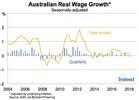
Didn't it?

Australia-real-wage-growth-Q1-2018.jpg


Didn't it?

View attachment 1335318


NO INFLATION means no inflationary based wage gains.

and what you are ignoring is the productivity index barely moved for this time period. you have to earn a pay rise, or be compensated for inflation.

if not, you are just creating inflation
 
NO INFLATION means no inflationary based wage gains.
I'm afraid I don't understand the relevance of this part. Could you please explain how that's relevant to the current situation where inflation is high?

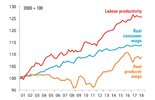
and what you are ignoring is the productivity index barely moved for this time period.

chart1-largeimage.jpg
 
I'm afraid I don't understand the relevance of this part. Could you please explain how that's relevant to the current situation where inflation is high?


View attachment 1335359

and the time frame you used is basically constant.

the reality is most of the brutal labour productivity reforms were in the 90's under hawke/keating/howard
 

Remove this Banner Ad

And wage growth still lagged it.

Barely

And fwiw I've been impacted on this. My wage barely moved over 10 years.

BUT there is no conspiracy suppressing wages. For all Cormanns shit, this is a market decision.
 
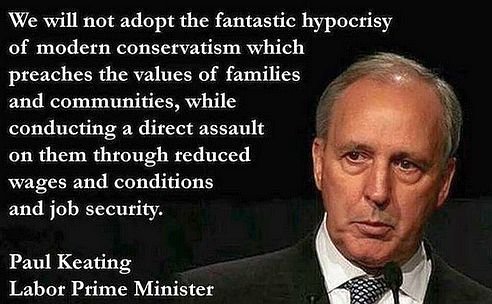
Succinct and hitting the mark as always. Jeez, I miss him.

0rA7D4t.jpg
 
Succinct and hitting the mark as always. Jeez, I miss him.

0rA7D4t.jpg
I mean he was good at running lines at the opposition. Less good at not ****ing things up for future progressive governments.
 
I mean he was good at running lines at the opposition. Less good at not ******* things up for future progressive governments.
One of the most transformative political figures in recent history both as treasurer and PM. Running lines at the opposition was just his pastime.
 

🥰 Love BigFooty? Join now for free.

One of the most transformative political figures in recent history both as treasurer and PM. Running lines at the opposition was just his pastime.
Half true and I loved Keating. But I’ve read his bio and a bunch of other stuff and there seems a pretty uniform view that in his latter years as PM his close colleagues felt his focus became more and more about the cut and thrust of winning question time and similar, which was a part of politics he excelled at and enjoyed - probably to the neglect of governance and policy tasks that need to be balanced as leader
 
Half true and I loved Keating. But I’ve read his bio and a bunch of other stuff and there seems a pretty uniform view that in his latter years as PM his close colleagues felt his focus became more and more about the cut and thrust of winning question time and similar, which was a part of politics he excelled at and enjoyed - probably to the neglect of governance and policy tasks that need to be balanced as leader
I'm not doubting he tailed off a bit. Which polly hasn't? However, he was always a parliamentary performer. That doesn't detract from him being transformative as treasurer and to a lesser extent as PM.
 
I'm not doubting he tailed off a bit. Which polly hasn't? However, he was always a parliamentary performer. That doesn't detract from him being transformative as treasurer and to a lesser extent as PM.
Oh yeah. Absolutely. And a brilliant mind. We don’t see many these days :(
 

Remove this Banner Ad

Remove this Banner Ad

🥰 Love BigFooty? Join now for free.

Back
Top Bottom