Navigation
Install the app
How to install the app on iOS
Follow along with the video below to see how to install our site as a web app on your home screen.
Note: This feature may not be available in some browsers.
More options
Style variation


You are using an out of date browser. It may not display this or other websites correctly.
You should upgrade or use an alternative browser.
You should upgrade or use an alternative browser.
Zoning
- Thread starter pz5151
- Start date
- Tagged users None
🥰 Love BigFooty? Join now for free.


- Joined
- Mar 6, 2011
- Posts
- 9,827
- Reaction score
- 13,656
- Location
- Adelaide
- AFL Club
- Collingwood
- Other Teams
- Collingwood (VFL), Man Utd.
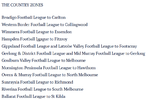
Victorian Recruiting Zones | Blueseum - History of the Carlton Football Club
Blueseum: History of the Carlton Football Club
 www.blueseum.org
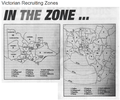
What zoning in the AFL used to look like
We look back at the old system - and where today's stars would have ended up if the system was still in place.

Supermercado
The straw that stirs the drink


- Joined
- Dec 18, 2002
- Posts
- 9,494
- Reaction score
- 4,607
- Location
- demonwiki.org
- AFL Club
- Melbourne
- Other Teams
- AFC Wimbledon, Atlanta Braves
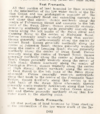
Before they withdrew due WW1, Melbourne's zone for 1916 was meant to be:
Commencing at a point at the junction of Victoria-street and Elizabeth-street, thence easterly along Victoria street and Victoria-parade to Hoddle-street; thence southerly along Hoddle-street and Punt-road to the River Yarra; thence easterly along the River Yarra to the Gardiner's Creek; thence easterly along the Gardiner's Creek to Back Creek; thence easterly along Back Creek to Glen Iris-road; thence southerly along Glen Iris-road to Ferndale-road; thence easterly along Ferndale-road to Summer Hill-road; thence southerly along Summer Hill-road to Baker-parade; thence easterly along Baker-parade to the Outer Circle railway line thence southerly by the Outer Circle railway line to High-street; thence easterly along High-street to Boundary-road; thence southerly along Boundary-road and Warragul-road to the Gippsland railway line to its junction with the Outer Circle railway line; thence northerly along the Outer Circle railway line to its junction with the Glen Iris railway line; thence northerly along the Glen Iris railway line to the a point opposite Wattletree-road; thence westerly along Wattletree-road to the Caulfield railway line; thence northerly along the Caulfield railway line to High-Street; thence westerly along High-street to St Kilda-road; thence northerly along St. Kilda-road and Swanston-street to Flinders-street thence westerly along Flinders-street to Elizabeth-street; thence northerly along Elizabeth St to the commencing point.
Good luck working that out.
Commencing at a point at the junction of Victoria-street and Elizabeth-street, thence easterly along Victoria street and Victoria-parade to Hoddle-street; thence southerly along Hoddle-street and Punt-road to the River Yarra; thence easterly along the River Yarra to the Gardiner's Creek; thence easterly along the Gardiner's Creek to Back Creek; thence easterly along Back Creek to Glen Iris-road; thence southerly along Glen Iris-road to Ferndale-road; thence easterly along Ferndale-road to Summer Hill-road; thence southerly along Summer Hill-road to Baker-parade; thence easterly along Baker-parade to the Outer Circle railway line thence southerly by the Outer Circle railway line to High-street; thence easterly along High-street to Boundary-road; thence southerly along Boundary-road and Warragul-road to the Gippsland railway line to its junction with the Outer Circle railway line; thence northerly along the Outer Circle railway line to its junction with the Glen Iris railway line; thence northerly along the Glen Iris railway line to the a point opposite Wattletree-road; thence westerly along Wattletree-road to the Caulfield railway line; thence northerly along the Caulfield railway line to High-Street; thence westerly along High-street to St Kilda-road; thence northerly along St. Kilda-road and Swanston-street to Flinders-street thence westerly along Flinders-street to Elizabeth-street; thence northerly along Elizabeth St to the commencing point.
Good luck working that out.
Log in to remove this Banner Ad


- Joined
- Feb 23, 2001
- Posts
- 3,985
- Reaction score
- 1,208
- Location
- a van down by the river
- AFL Club
- Gold Coast
Wonder why they would go to this much complexity
Last edited:

- Joined
- Jun 23, 2003
- Posts
- 3,702
- Reaction score
- 425
- Location
- 32º 03'S 115º 45'E
- AFL Club
- Fremantle
- Other Teams
- South Fremantle
Sounds like it was written by a property lawyer!
What year was this and what book/paper/budget was it from?
Anyone able to match up that metro map with what suburbs they cover. I can tell Collingwood is vaguely covering the Hurstbridge line but can’t really tell where the borders lie. I always thought Fitzroy’s line was on the east of ours cos I played Vic Kick in Alphington and we got put in the Fitzroy little league rather than Collingwood.View attachment 1651785Victorian Recruiting Zones | Blueseum - History of the Carlton Football Club
Blueseum: History of the Carlton Football Club
View attachment 1651788
What zoning in the AFL used to look like
We look back at the old system - and where today's stars would have ended up if the system was still in place.www.theage.com.au
- Joined
- Feb 23, 2001
- Posts
- 3,985
- Reaction score
- 1,208
- Location
- a van down by the river
- AFL Club
- Gold Coast
Sounds like it was written by a property lawyer!
What year was this and what book/paper/budget was it from?
1957
Last edited:

- Joined
- Aug 7, 2004
- Posts
- 8,717
- Reaction score
- 7,602
- AFL Club
- Hawthorn
Latrobe Valley was split in two, Hawthorn from Warragul to Morwell, Traralgon and east to Bairnsdale to footscray
Wimmera: Collingwood had Stawell and Ararat and the rest of the league to Essendon.
Wimmera: Collingwood had Stawell and Ararat and the rest of the league to Essendon.

Aut Vincere Aut Mori
Debutant
- Joined
- Jul 21, 2020
- Posts
- 91
- Reaction score
- 82
- AFL Club
- Sydney
No wonder South Melbourne struggled for so long Most of their metropolitan zone was empty paddocks, factories, docks, or oil refineries. Their country zone wasn't even in Victoria. The country zones were meant to be redistributed every three years when they were initially introduced but this was soon forgotten when some Clubs got great zones.
Also, the metropolitan zones did alter at times as some of Hawthorn's Mornington Peninsula zone was allocated to South's for a short while. Hawthorn whined about it and it quickly went back to Hawthorn.
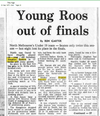
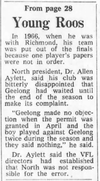
Most Clubs knew how to manipulate the system and registered players at homes inside their zones. North Melbourne U-19's got caught out playing a player not within their zone in the late 1970's or 1980's and had most of their wins from the season cancelled and they went from a finalist to near bottom. The name Stephen Easton (played later with NM and Carlton) rings a bell. My memory also is that Peter Hall of South Melbourne (played 5 games 1978-79) successfully challenged the legality of the zones in court (he was tied to Carlton or Collingwood) and was permitted to be registered with South. It was well known at the time that the zones and the clearance system were an unfair restraint of trade but the clubs kept it in place because they feared mayhem if it was challenged. Eventually, Sylvio Foschini and Paul Morwood (with the backing of St.Kilda) brought the illegality down in the Supreme Court.
Also, the metropolitan zones did alter at times as some of Hawthorn's Mornington Peninsula zone was allocated to South's for a short while. Hawthorn whined about it and it quickly went back to Hawthorn.
Most Clubs knew how to manipulate the system and registered players at homes inside their zones. North Melbourne U-19's got caught out playing a player not within their zone in the late 1970's or 1980's and had most of their wins from the season cancelled and they went from a finalist to near bottom. The name Stephen Easton (played later with NM and Carlton) rings a bell. My memory also is that Peter Hall of South Melbourne (played 5 games 1978-79) successfully challenged the legality of the zones in court (he was tied to Carlton or Collingwood) and was permitted to be registered with South. It was well known at the time that the zones and the clearance system were an unfair restraint of trade but the clubs kept it in place because they feared mayhem if it was challenged. Eventually, Sylvio Foschini and Paul Morwood (with the backing of St.Kilda) brought the illegality down in the Supreme Court.
- Joined
- Mar 6, 2011
- Posts
- 9,827
- Reaction score
- 13,656
- Location
- Adelaide
- AFL Club
- Collingwood
- Other Teams
- Collingwood (VFL), Man Utd.
No wonder South Melbourne struggled for so long Most of their metropolitan zone was empty paddocks, factories, docks, or oil refineries. Their country zone wasn't even in Victoria. The country zones were meant to be redistributed every three years when they were initially introduced but this was soon forgotten when some Clubs got great zones.
Also, the metropolitan zones did alter at times as some of Hawthorn's Mornington Peninsula zone was allocated to South's for a short while. Hawthorn whined about it and it quickly went back to Hawthorn.
Most Clubs knew how to manipulate the system and registered players at homes inside their zones. North Melbourne U-19's got caught out playing a player not within their zone in the late 1970's or 1980's and had most of their wins from the season cancelled and they went from a finalist to near bottom. The name Stephen Easton (played later with NM and Carlton) rings a bell. My memory also is that Peter Hall of South Melbourne (played 5 games 1978-79) successfully challenged the legality of the zones in court (he was tied to Carlton or Collingwood) and was permitted to be registered with South. It was well known at the time that the zones and the clearance system were an unfair restraint of trade but the clubs kept it in place because they feared mayhem if it was challenged. Eventually, Sylvio Foschini and Paul Morwood (with the backing of St.Kilda) brought the illegality down in the Supreme Court.

Former VFL player found guilty of conning friends

This is from a spreadsheet that was/is on the Blueseum site (U19s tab):

Aut Vincere Aut Mori
Debutant
- Joined
- Jul 21, 2020
- Posts
- 91
- Reaction score
- 82
- AFL Club
- Sydney
Thankyou for confirming that my memory isn't failing me. Sad story about Peter Hall. North Melbourne U-19's Won 20 games Drew1 and Lost only 1 game that season to finish second. Richmond Won 19 Drew 2 and Lost 1 game to top the table. It would have been as interesting finals series but for the disqualification.
My father knew quite a few South Melbourne committeemen in the 1970's and they were hoping that someone would challenge the zoning and transfer rules of the VFL so that it could be open slather on recruiting given that South had possibly the worst country zone and next to worst metropolitan zone (I reckon poor old North possibly had the worst). They were hoping that John Pitura would challenge the rules but pressure was brought to bear by VFL administration to cave in to Richmond and clear him. South had a number of wealthy benefactors that were prepared to fund any high profile players prepared to sign with the Swans and challenge the rules.
My father knew quite a few South Melbourne committeemen in the 1970's and they were hoping that someone would challenge the zoning and transfer rules of the VFL so that it could be open slather on recruiting given that South had possibly the worst country zone and next to worst metropolitan zone (I reckon poor old North possibly had the worst). They were hoping that John Pitura would challenge the rules but pressure was brought to bear by VFL administration to cave in to Richmond and clear him. South had a number of wealthy benefactors that were prepared to fund any high profile players prepared to sign with the Swans and challenge the rules.

Art Vandelay_
OhhYessssss


- Joined
- Oct 28, 2012
- Posts
- 115,171
- Reaction score
- 163,542
- AFL Club
- Geelong
- Other Teams
- Bushrangers - Tottenham


Aut Vincere Aut Mori
Debutant
- Joined
- Jul 21, 2020
- Posts
- 91
- Reaction score
- 82
- AFL Club
- Sydney
Excellent overview of the zoning system. South's zone wasn't even in Victoria. At least St. Kilda's was!