

Remove this Banner Ad

Random Science news and articles

🥰 Love BigFooty? Join now for free.

The last 8000 or so years of development of the Proto-Indo-European (PIE) has been broadly established, the so called hybrid hypothesis. Starts somewhere around Turkey then over 2000 years reaches the steppes.
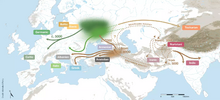
1759295729327.png
.
 
Congratulation to Prof Richard Robson of University of Melbourne for being a joint winner of the Nobel prize for chemisty. Always good when an Australian gets the silverware.
 
Article in the Conversation by a scientist who films snakes biting in extreme slow motion. Probably not for folks who have snake phobias
Vipers strike their usual prey in <90ms 84% of the time, which is faster than most of their prey. Human reaction time is pretty slow at >200ms, Cats, Dogs and even Louie the Fly are quicker - it's why they are so hard to swat. I asked my silicon pal to list some animals:

Reaction Time Across the Animal Kingdom​

SpeciesAverage Reaction TimeNotes
Humans200–250 msVaries by age, fatigue, and training
Dogs100–150 msGuard breeds react faster than human blink
Cats20–70 msExceptional reflexes for hunting and evasion
Monkeys (e.g. macaques)~100 msFast visual-motor coordination
Flies (e.g. housefly)5–30 msBarrel-roll evasions filmed at 600 fps
Mantis Shrimp~8 msPunches with extreme speed and force
Dragonflies~30 msPrecision aerial hunting reflexes
Rabbits~100 msPrey reflexes tuned for escape
Deer~120 msHigh alertness and fast motor response
Zebras~150 msHerd prey with strong flight instincts
Snakes (e.g. vipers)50–90 msStrike speed varies by species
Mongooses~40 msKnown for lightning-fast snake evasion
Penguins~150 msSlower than most birds, but still quick


🧠 Why These Differences Exist​

  • Insects like flies and mantis shrimp have ultra-fast neural circuits and perceive time more slowly, giving them more “frames” to react.
  • Prey animals (rabbits, deer, zebras) evolved rapid reflexes to escape predators.
  • Predators (cats, snakes, mongooses) rely on split-second timing to catch or avoid prey.
  • Humans trade raw speed for complex cognition, though elite athletes can train down to ~150 ms.
The ai didn't really discuss the trick the Mantis Shrimp has. Like many crustaceans, it has a direct electrical synapses in the neuromuscular junction of the tail which work much, much faster than those chemical synapses most other animals depend on. Hence the 8ms response time, the speed of the response is part of the reasons these guys have the most powerful punch (per body weight) in nature. But that's another story.
 
Last edited:

Log in to remove this Banner Ad

One of the algae involved in the terrible SA bloom has been identified as a species called Karenia cristata, a relatively rare Karenia that produces brevetoxins.

"The research found that Karenia cristata significantly contributed to the bloom, alongside other Karenia species already identified in the mix: K. mikimotoi, K. brevisulcata, K. longicanalis, and K. papilionacea."


"Professor Murray said respiratory symptoms in surfers near Victor Harbor in March had suggested the presence of a brevetoxin-producing species in addition to Karenia mikimotoi, which was the initial species identified within the bloom.

That suggestion was confirmed in early May when the South Australia Shellfish Quality Program confirmed that brevetoxins were present in South Australian waters."
 

Scientists have discovered a new sun shaped microorganism, Solarion arienae, that belongs somewhere in the Eukaryote linage, as it has a nucleus and mitochondria.


The really interesting thing is, the mitochondrial DNA in this beasty has a gene that is not present in other mitochondria, a gene that probably belonged to the original organism that the mitochondria evolved in. The gene secA is involved in getting proteins across its membrane when the mitochondrial carrying organsim lived independently. This is extra evidence of endosymbiosis, an idea that started centuries ago and was promoted by Lyn Margulis in the 60's and for which she was treated very badly.
 
It's 1.00 am on a Friday night and an article (a very interesting one) about Penises seems appropriate. The gals should be glad us blokes don't still have spikes like some of our simian cousins.

 
An interesting article about time. The solution to unifying general relativity and quantum mechanics may depend on understanding the true nature of time.

Time is mans measure for the passing of events - and the use of passing indicates measurable moments ie this happened at this time

This is typically phrased as being in the direction of increasing entropy: our unwinding Universe, balls rolling downhill, ice cubes melting in a glass of water and so on.

In this example one could argue that the melted water can return to ice - so its multi-directional and not forward entropy

Anyway it does my head in thinking about it - I might lie down for a period of time determined by the period between wakefulness
 

Remove this Banner Ad

Random Science news and articles

🥰 Love BigFooty? Join now for free.

Back
Top