
Remove this Banner Ad

Mod. Notice Technological advances in weaponry

🥰 Love BigFooty? Join now for free.

1750492514953.png
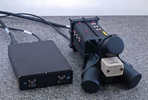
Naval News had a couple of interesting underwater warfare related articles. The first is fitting MAD (Magnetic Anomaly Detection) detectors to our MH-60R fleet. It's a technology developed by CEA Australia, the CAE Magnetic Anomaly Detection-Extended Role (MAD-XR) system and it looks like the USN may adopt it. Small enough for modest drones, too.


I did't know why Magnetic Anomaly Detection went out of fashion a bit, it isn't part of our P8 kit, whereas it was on our P3's IIRC. The Indian P8 has one, they insisted. So I asked my silicon pal who gave this answer:

Effect of Aircraft Height

Height is critical. Magnetic fields weaken rapidly with distance — specifically, the signal strength drops off with the inverse cube of the distance. So, doubling the altitude reduces the signal strength by a factor of eight. For example:
  • At 200 meters altitude, detection ranges might be 450–800 meters horizontally.
  • At 400 meters, that range can shrink to under 150 meters.
This is why MAD sensors are often placed in tail booms or towed behind aircraft to minimize interference and get closer to the water.

Detection Depths and Ranges

  • Submarine size and hull composition: Larger, steel-hulled subs are easier to detect.
  • Depth: MAD is most effective against shallow submarines, typically within a few hundred meters of the surface.
  • Range: Practical detection slant ranges are usually under 1 km, often closer to 500–800 meters.

Factors Affecting Effectiveness

  • Altitude of the aircraft (as discussed)
  • Magnetic noise from the aircraft itself or the environment
  • Geological background: Areas with high magnetic variation (like volcanic regions) can mask anomalies
  • Orientation of the submarine relative to the sensor
  • Speed of the aircraft: Faster speeds reduce dwell time over a target, potentially missing anomalies

Next article in Naval News is about a 'pod' that allows launching of non-marinized munitions by subs.

 
1752623616977.png
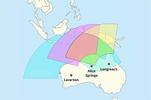
I thought plans were in action to increase JORN's coverage to the east, but after reading the article below, it is clear they are not, but certainly should be.


I guess JORN's coverage was determined by where threats were likely and wrt to the east, the only thing likely in the past was a USN carrier group coming to our rescue. How times have changed. I would have thought this was a good project for the CoA to fund at this time. Low risk, big reward. Whittle way at that 5% the yanks want us to spend on defence.
 
Microwave directed energy weapons are discussed in this article from the Warzone. It is interesting because it talks about how the Eprius system works in some detail and compares it to Thor, a system which literally 'cooked chips'. Eprius disrupts the drone for a millisecond, which allegedly then shuts the drone down.

.....Radio frequency directed-energy weapons like this offer notable advantages over ‘soft-kill’ options, like electronic warfare jammers, given that they can also bring down drones that are operating autonomously, or those using fiber-optic-cable guidance, by disrupting their onboard electronics...

Lowery explained that when Epirus began development in 2018, it was initially envisioned as a phased array version of a THOR-type (Tactical High-power Operational Responder) system. But after further developing IFPC-HPM GEN I, the company realized that Leonidas wasn’t operating anything like THOR.

Leonidas, he says, doesn’t destroy drones by narrowly targeting and overloading their capacitors like THOR. Lowery compares THOR to a “death ray.” Leonidas, he explains, generates a very intense electromagnetic interference field (EIF).

....it does this by extending an electromagnetic field through large periods of time. Traditional HPM puts out a massively powerful pulse for about 10 nanoseconds – shorter than the distance between one computer clock pulse and the next clock pulse – Lowery says.

Leonidas’ HPM pulse extends to a millisecond, longer than even radars. “Imagine, a thousand clock cycles might be in that millisecond. The whole time that electromagnetic energy is just hitting and hitting that [target], confusing it to the point where the system shuts down. That’s how the [Leonidas system] works.”

https://www.twz.com/land/army-puts-...nidas-high-power-microwave-counter-drone-tech
 

Log in to remove this Banner Ad

The RAN have chosen the Japanese Mogami class frigates to be the new general purpose frigates. Good choice for a number of reasons. First 3 are to be made in Japan, the remaining 8 here, pretty good plan as it get some hulls in the water quickly and currently the RAN fleet is being held together with sticky tape.


If the AUKUS subs fall through, my bet would be we get Jap subs.

Added - ASPI article describes the Morgami class in some detail:
 
Last edited:
Recently the US DOD cancelled there orders for the E7 AWAC's, the one the RAAF helped Boeing develop. The reason for the cancellation was a switch to space based sensors for 'battle space management'. The problem is, it doesn't exist. It will take decades and some of the problems, such as providing accurate aircraft tracks haven't been solved. This article from the Warzone talks about it:


This is apparently Kegsbreaths decision and probably relates to Trumps Golden Shower Dome project and it's need for space sensors. Unfortunately this leaves the USAF with a big hole with it's airspace management. The plan is to lengthen the life of the old E3 until space based sensors take over. One Maggot said in the comments "We have 31 of the f*cking birds'. The truth is only 16 fly and they have a 56% availability, so only 8 or 9 at a time can be used. The aging airframes take 14 hours of to get prepped for a mission.

For comparison the RAAF have 6 E7 for around 100 combat jets.

The success of the PAF in the recent spat with India was in part due to better AWAC's.

It really is the United States of Idiocy.
 
This is a bit of a coup for Australia's EOS systems, their 100kW laser anti-drone system is being sold to 'someone' in Europe. This is the first export order of its kind in the world, valued at A$125 million, and includes radar, threat detection, beam control and laser.


FYI 100kW are about the point where lasers get useful. I found this table a good summary. Obviously accurate tracking and adequate time on target are vital. .

Target TypeEffect of 100kW Laser
Drones✅ Highly effective: Can burn through airframes, sensors, and rotors in seconds. Ideal for swarm defense.
Missiles⚠️ Moderately effective: Can disable guidance systems or detonate warheads if focused long enough, but fast-moving missiles require precise tracking.
Aircraft⚠️ Limited effect: Can damage optics, sensors, or fuel lines, but not easily penetrate hardened fuselages or cause catastrophic failure unless sustained on a vulnerable spot. Blind pilots.
 
AFR has an article about the Morgami frigate framing it as the ADF picking the shiny new toy, with high risk and selected because of geopolitics.


They fail to mention it has a
  • vastly greater range (important in the Pacific)
  • double the VLS (absolutely vital in the 21C)
  • smaller crew (important to the RAN)
  • stealthier (important for survivability)

I'm not sure why these facts were not mentioned, I don't know if it's the authors incompetence, ideology or they have some connection to the losing bidders. They give you the impression this is vaporware, high risk selection like the the T26/Hunter frigates was, which it is not. Very poor article.

Even the Labor hating Oz gives it a tick.
 
Last edited:
Crewing is absolutely an important aspect of defence acquisition these days.
Long term retention trends have been poor and the Navy has always had a few retention black spots - seagoing mech engineers has been an issue for 30+ years (and likely longer).
 
Crewing is absolutely an important aspect of defence acquisition these days.
Long term retention trends have been poor and the Navy has always had a few retention black spots - seagoing mech engineers has been an issue for 30+ years (and likely longer).
Yes, crewing vessels has been a big problem for a while. I don't think most people realise it. I know crew size is often at the forefront of decisions by the RAN. Going forward USV's do offer some solutions because the operators are 'at home'.
This article looks at the 'Hybrid Navy' concept for the RAN


I've thought for a while Australia should consider a territorial army/continental defence force bit like Ukraine. It wouldn't be for combat fit soldiers but for the rest of us. We already have Norforce as an example of a capability delivered in part by non conventional army. Drones operated from Oz don't need combat soldiers to operate them, in fact you might consider it a waste. Training up a drone force out of civvies would enable significant scaling up. I have seen that Ukraine is said to have 20,000 drone operators, which is about a third the size of the entire ADF!
 
PRC landing barges with legs, not to walk but hold them still. The Taiwanese commentators quoted in the article believe it is more performative rather than practical.

 
A suggestion for the ADF to acquire long ranch ballistic missiles launched from mobile launchers. I don't think these have ever seriously been on the ADF's dance card, but times change and every one else is doing it.


If there were to be interest by the ADF, it would reflect a couple of things, first the change externals with the US being seen as less reliable and the recent technical ability of long range ballistic missile to hit ships. Maybe. Sometimes.
 

Remove this Banner Ad

This is an article that looks at why the Morgami frigates were elected over the Meko200. It actually tells you something useful rather than crappy fact free opinion piece from the AFR.

That's really good break down.
IIRC some cells can be configured to hold up to 4 of a certain type of missile each, depending on size.

An augmented wall in the CIC certainly beats the punch card system in the DDGs in the 90s...
 
That's really good break down.
IIRC some cells can be configured to hold up to 4 of a certain type of missile each, depending on size.

An augmented wall in the CIC certainly beats the punch card system in the DDGs in the 90s...
Yes, I thought it gave a realistic picture. Bit more risk than the TKMS offering but more capable in many ways. The risk would be considered manageable - fingers crossed.

The ESSM that the RAN carry are quad packed, hence why the limited 8 cell VLS the Anzac can provide reasonable magazine depth with 32 missiles. I think there are others in dual packs that USN field that we don't have. The VLS on 'our' Morgami are 'full size' and able to accommodate large missiles like the Tomahawk.

Yes, the CIC is futuristic. Presumably well worked out, the JMSDF are up to boat #6.
 
Yes, I thought it gave a realistic picture. Bit more risk than the TKMS offering but more capable in many ways. The risk would be considered manageable - fingers crossed.

The ESSM that the RAN carry are quad packed, hence why the limited 8 cell VLS the Anzac can provide reasonable magazine depth with 32 missiles. I think there are others in dual packs that USN field that we don't have. The VLS on 'our' Morgami are 'full size' and able to accommodate large missiles like the Tomahawk.

Yes, the CIC is futuristic. Presumably well worked out, the JMSDF are up to boat #6.
There's something to be said for proven technology too (the Toyota principle).

Nobody mention the Sea Sprite project...
 
The RAN are formally getting the Ghost Shark, Autonomous UUV. "Dozens" it says but numbers are a bit vague. CoA have signed a 1.7 billion dollar contract with Anduril aimed at getting the little subs out and about by 2026.

 
ADF have contracted Leidos to start building it's Sea Archer, small USV in Oz.
Good to see some progress and it's a drone suitable for small boat builders to construct. I think that's important so production can be scaled up easily, steel workers will be in very short supply if the party looks like starting and I have doubts about being able to scale up traditional ship building at all.
 
SMH article about Ghost Shark and it's friends.

While we have very cleverly developed and are introducing 2 large, high end platforms, we haven't introduced drones widely or quickly, there is some discussion of this in the article. My own feeling is we should be learning everything we can from the war in Ukraine and introducing the successful technologies ASAP if they are relevant to us.
 

🥰 Love BigFooty? Join now for free.

Droning on.....
Droneshield has partnered with Sentrycs who provided cyber software to hack drones.


Hacking drones is a great way to handle them, especially en masse. From the article it appears the Sentrycs software allows you to engage the drones with a variety of cyber attacks, eg: cut connections to remote controllers, reprogram drone positions, guides drones to land for recovery and analysis. Pretty neat.

Droneshield seem to be doing well, getting a start in the war in Ukraine. Interesting interview with their CEO on YouTube.

 
John Holmes talks about the possibility of what he calls a 'deconstructed destroyer' - using numerous smaller USV's to provide the capabilities of a traditional naval destroyer.
 
I've posted about EOS anti-drone systems before, this article actually gives some numbers to their Apollo anti-drone laser system. It comes in a 20ft shipping container and has recently been sold to a NATO country.

"One of the standout features of the Apollo laser system is its capability to engage multiple targets simultaneously. It can eliminate drones at distances of up to 1.86 miles (3 km) and can disable sensors from as far as 9 miles (15 km). Additionally, its 360-degree coverage ensures that it can respond to threats from any direction, enhancing its defensive capabilities.

The system’s ability to target 20 drones per minute makes it especially effective against swarm attacks, a tactic increasingly used to overwhelm defenses. This rapid targeting capability, combined with its internal power supply, allows the Apollo to maintain operational readiness even in challenging environments."


If it works as advertised I hope the ADF adopt it quickly along with the EW Droneshield tech and one of the locally produced kinetic solutions. It would give the ADF a broad and state of the art anti-drone capability
 
ABC have an article about the Apollo laser and it's use in Ukraine, still no mention of which NATO country has purchased it. It does contain a bit about use against satellites. I don't know if this refers to the Apollo laser or another unnamed system.

EOS has been developing laser weapons since the 1980s after it partnered with the American Strategic Defence Programme, which began through a government-to-government agreement. At the time, EOS was a government-owned research institute.

Now it is the only company outside the US that has developed lasers that can also destroy objects in space, including satellites, from the ground.

Dr Schwer said the technology had been developed with the question in mind of how Europe could protect its territory from being monitored by China or Russia from space.

"How can we blind or even disable those satellites permanently from the ground is something that is becoming extremely important," Dr Schwer said.

"Whoever can knock out and eliminate first the satellite fleet of the enemy, has won the conflict, because there is no more surveillance, intelligence or communication possible: it goes back to the old fighting way with artillery shells and swords."


There is clearly a tier in antidrone defence that's best done by slow moving aircraft, finally the Warthog has bagged a few drones with the old, cheap (relative to a SAM) and slightly modified artillery rockets

Ground based systems are also using rockets, for the same reasons - cheap and plentiful
 

Remove this Banner Ad

Mod. Notice Technological advances in weaponry

🥰 Love BigFooty? Join now for free.

Back
Top