






- Oct 1, 2014
- 6,699
- 14,468
- AFL Club
- Hawthorn
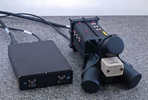

Sikorsky and CAE to integrate MAD-XR to MH-60R helicopters - Naval News
Sikorsky and CAE are collaborating to deliver the CAE MAD-XR system for installation aboard U.S. Navy and Royal Australian Navy MH-60R helicopters.
 www.navalnews.com
I did't know why Magnetic Anomaly Detection went out of fashion a bit, it isn't part of our P8 kit, whereas it was on our P3's IIRC. The Indian P8 has one, they insisted. So I asked my silicon pal who gave this answer:
Effect of Aircraft Height
Height is critical. Magnetic fields weaken rapidly with distance — specifically, the signal strength drops off with the inverse cube of the distance. So, doubling the altitude reduces the signal strength by a factor of eight. For example:- At 200 meters altitude, detection ranges might be 450–800 meters horizontally.
- At 400 meters, that range can shrink to under 150 meters.
Detection Depths and Ranges
- Submarine size and hull composition: Larger, steel-hulled subs are easier to detect.
- Depth: MAD is most effective against shallow submarines, typically within a few hundred meters of the surface.
- Range: Practical detection slant ranges are usually under 1 km, often closer to 500–800 meters.
Factors Affecting Effectiveness
- Altitude of the aircraft (as discussed)
- Magnetic noise from the aircraft itself or the environment
- Geological background: Areas with high magnetic variation (like volcanic regions) can mask anomalies
- Orientation of the submarine relative to the sensor
- Speed of the aircraft: Faster speeds reduce dwell time over a target, potentially missing anomalies
Next article in Naval News is about a 'pod' that allows launching of non-marinized munitions by subs.

Northrop Grumman Developing Submarine-Launched AARGM-ER and AARGM-XR - Naval News
Northrop Grumman Developing Submarine-Launched AARGM-ER and AARGM-XR
www.navalnews.com


 Highly effective: Can burn through airframes, sensors, and rotors in seconds. Ideal for swarm defense.
 Moderately effective: Can disable guidance systems or detonate warheads if focused long enough, but fast-moving missiles require precise tracking.


