Remove this Banner Ad

Coronavirus/COVID-19

🥰 Love BigFooty? Join now for free.

Hate to tell you but with Budget Direct you are screwed.

In Vegas, While I was asleep I got bitten on the face by a spider and incurred over $2500 in medical bills that they refused to insure because I couldn’t “PROVE” it was a spider and not self inflicted

No joke
I dare say that's the case for most insurers in that situation unfortunately. At least with a cancelled trip based on government advice it's a little more black and white then a spider bite which can't be 'proven', as ridiculous as your situation sounds.
 
I'm not ignoring anything, I just honestly think you're talking out of your arse because you don't know what the actual rate is. Even if it is 1%, it's still 10x higher than the flu isn't it? That doesn't sound significant to you?

And I wonder who'll treat the sick people who need care when they're locked away in isolation? Or do we also lock away anyone who has anything to do with treating them too? Or just let them fend for themselves?

I'm sure most people have a level of empathy to understand that cancelling a game of football, delaying a holiday and working from home for a period of time to help prevent a bunch of people dying is a worthy sacrifice to make.


Omg really?

Ok I’m not even going to bother explaining to you again we will just move on.

Hope your trip goes forward Italy is an amazing place 👍🏼
 
The Covid-19 outbreak is having a huge effect. Not just on people’s health. The economy is tanking big time.


The economic hit to our travel business is staggering. Luckily we don’t pay rent or mortgage but still got to pay staff & bills. We are spending time revamping our website & marketing material. There are no enquires to work on or sales to be made. As no one wants to travel.

Times will be much tougher for many businesses. We may survive but many business owners I know are looking to close early. No point going bankrupt, when you can close up shop and keep some cash to start a new business when things improve.
 
The Covid-19 outbreak is having a huge effect. Not just on people’s health. The economy is tanking big time.


The economic hit to our travel business is staggering. Luckily we don’t pay rent or mortgage but still got to pay staff & bills. We are spending time revamping our website & marketing material. There are no enquires to work on or sales to be made. As no one wants to travel.

Times will be much tougher for many businesses. We may survive but many business owners I know are looking to close early. No point going bankrupt, when you can close up shop and keep some cash to start a new business when things improve.
Sorry to hear. I was asked to go on a cruise but really, would that be sensible, currently? Also have a flight booked in mid April but depending on the situation nearer to the time, may have to cancel and lose our money 😟.
 

Log in to remove this Banner Ad

Absurd or not, you only need to look at the response of governments in Italy, China and elsewhere to see how drastically the authorities are responding to it. I think it's pretty fair to say we haven't seen the like of it in our lifetimes.

So choosing a course of action might not even be up to the AFL. Their hand may be forced by government.

As for quarantine being only 14 days (the currently accepted period) that can still have a massive effect, whether it hits an entire list at one time or works on a rolling basis depending on who shows symptoms or had contact with someone sick.

And people who proved not to be infected after a first round of quarantine could find themselves isolated for a second period if/when they come into contact with another person testing positive to COVID-19.

I'm no epidemiologist, so my observations are not about the rightness or wrongness of the response to the disease. They are from watching how people, markets, governments and sporting bodies are already behaving.
Haven't seen anything like it in our lifetime? Swine Flu and SARS both killed considerably more people and lasted around a year. Its just that there wasn't as much hysteria around those and nobody was bulk buying toilet rolls etc.


Figured it's probably worth starting a separate thread on this rather than derail the non-Bulldog footy talk thread. Obviously will be an ongoing topic of discussion throughout the next months.

Tonight from the Victorian government and AFL:
From the ABC News tonight. I presume other news media are carrying similar reports:


Victorian Premier Daniel Andrews says it is only a matter of time before schools close across the state and large sporting and cultural events are cancelled to combat the spread of coronavirus.

While the Premier said the State Government had no immediate plans to cancel football matches or the Grand Prix, he said "extreme measures" would likely need to be taken in the future, when there is a significant number of transmissions of the disease within Victoria.

"We will need to ask Victorians to do things we have never asked them to do before," he said.


...


AFL chief executive Gillon McLachlan said if mass gatherings were suspended "then we will play games in stadiums with no crowds."
He said the AFL had a working group to deal with the issue and had listened to what the Victorian Government had said today.
"Our advice at the moment is to push ahead as planned and round one will go ahead as planned with supporters," he said.
"But I think we take note of what was said today."
Asked if games could be delayed, Mr McLachlan said the league intended to stage every scheduled match.
"That is all I can say and we will continue to make the decisions we need to, to get that done," he said.
He encouraged fans to continue attending matches as long as that was allowed.


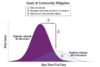
For those in the other thread questioning the need to implement mitigation strategies for something that is 'barely worse than a flu', this might be informative as to why we will see football games played behind closed doors or cancelled for period of time (amongst everything else that will happen to our usual routines):

1583837241795.png
Source: US Centers for Disease Control and Prevention

“Everything we do before a pandemic will seem alarmist. Everything we do after will seem inadequate.” Mike Leavitt
 
Last edited:
In any crisis, leaders have two equally important responsibilities: solve the immediate problem and keep it from happening again. The COVID-19 pandemic is an excellent case in point. The world needs to save lives now while also improving the way we respond to outbreaks in general. The first point is more pressing, but the second has crucial long-term consequences.

The long-term challenge—improving our ability to respond to outbreaks—isn’t new. Global health experts have been saying for years that another pandemic rivalling the speed and severity of the 1918 influenza epidemic wasn’t a matter of if but when. The Bill & Melinda Gates Foundation has committed significant resources in recent years to helping the world prepare for such a scenario.

Now, in addition to the perennial challenge, we face an immediate crisis. In the past week, COVID-19 has started to behave a lot like the once-in-a-century pathogen we’ve been worried about. I hope it’s not that bad, but we should assume that it will be until we know otherwise.

There are two reasons that COVID-19 is such a threat. First, it can kill healthy adults in addition to elderly people with existing health problems. The data so far suggests that the virus has a case fatality risk around 1%; this rate would make it several times more severe than typical seasonal influenza and would put it somewhere between the 1957 influenza pandemic (0.6%) and the 1918 influenza pandemic (2%).

Second, COVID-19 is transmitted quite efficiently. The average infected person spreads the disease to two or three others. That’s an exponential rate of increase. There is also strong evidence that it can be transmitted by people who are just mildly ill or not even showing symptoms yet. This means COVID-19 will be much harder to contain than Middle East Respiratory Syndrome or Severe Acute Respiratory Syndrome (SARS), which were only spread by those showing symptoms and were much less efficiently transmitted. In fact, COVID-19 has already caused 10 times as many cases as SARS in just a quarter of the time.

The good news is that national, state, and local governments and public health agencies can take steps over the next few weeks to slow the spread of COVID-19.

For example, in addition to helping their own citizens respond, donor governments should help low- and middle-income countries prepare for this pandemic. The health systems in many of these countries are already stretched thin, and a pathogen like coronavirus can quickly overwhelm them. And poorer countries have little political or economic leverage, given wealthier countries’ natural desire to put their own people first.


“By helping countries in Africa and South Asia get ready now, we can save lives and also slow the global circulation of the virus.”
By helping countries in Africa and South Asia get ready now, we can save lives and also slow the global circulation of the virus. (A significant portion of the commitment Melinda and I recently made to help kickstart the global response to COVID-19—which could total up to $100 million—is focused particularly on developing countries.)

The world also needs to accelerate work on treatments and vaccines for COVID-19. Scientists were able to sequence the genome of the virus and develop several promising vaccine candidates in a matter of days, and the Coalition for Epidemic Preparedness Innovations is already preparing up to eight promising vaccine candidates for clinical trials. If one or more of these vaccines proves safe and effective in animal models, they could be ready for larger-scale trials as early as June. Drug discovery can also be accelerated by drawing on libraries of compounds that have already been tested for safety and by applying new screening techniques, including machine learning, to identify antivirals that could be ready for large-scale clinical trials within weeks.

All these steps would help address the current crisis. But we also need to make larger systemic changes so we can respond more efficiently and effectively when the next epidemic arrives.

It’s essential to help low- and middle-income countries strengthen their primary health care systems. When you build a health clinic, you’re also creating part of the infrastructure for fighting epidemics. Trained health care workers not only deliver vaccines; they can also monitor disease patterns, serving as part of the early warning systems that will alert the world to potential outbreaks.

The world also needs to invest in disease surveillance, including a case database that is instantly accessible to the relevant organizations and rules that require countries to share their information. Governments should have access to lists of trained personnel, from local leaders to global experts, who are prepared to deal with an epidemic immediately, as well as lists of supplies to be stockpiled or redirected in an emergency.

In addition, we need to build a system that can develop safe and effective vaccines and antivirals, get them approved, and deliver billions of doses within a few months of the discovery of a fast-moving pathogen. That’s a tough challenge that presents technical, diplomatic, and budgetary obstacles, as well as demanding partnership between the public and private sectors. But all these obstacles can be overcome.

One of the main technical challenges for vaccines is to improve on the old ways of manufacturing proteins, which are just too slow for responding to an epidemic. We need to develop platforms that are predictably safe, so regulatory reviews can happen quickly, and that make it easy for manufacturers to produce doses at a low cost and a massive scale. For antivirals, there will need to be an organized system to screen existing treatments and candidate molecules in a swift and standardized manner.

Another technical challenge involves constructs based on nucleic acids. These constructs can be produced within hours after a virus’s genome has been sequenced; now we need to find ways to produce them at scale.

In addition to these technical solutions, we’ll need diplomatic efforts to drive international collaboration and data sharing. Developing antivirals and vaccines involves massive clinical trials and licensing agreements that would cross national borders. We should make the most of global forums that can help achieve consensus on research priorities and trial protocols so that promising vaccine and antiviral candidates can move quickly through this process. These platforms include the World Health Organization R&D Blueprint, the International Severe Acute Respiratory and Emerging Infection Consortium trial network, and the Global Research Collaboration for Infectious Disease Preparedness. The goal of this work should be to get conclusive clinical trial results and regulatory approval in three months or less, without compromising patients’ safety.


“Budgets for these efforts need to be expanded several times over.”
Then there is the question of funding. Budgets for these efforts need to be expanded several times over. Billions more dollars are needed to complete Phase III trials and secure regulatory approval for coronavirus vaccines, and still more funding will be needed to improve disease surveillance and response.

Why does this require government funding—can’t the private sector solve this on its own? Pandemic products are extraordinarily high-risk investments, and pharmaceutical companies will need public funding to de-risk their work and get them to jump in with both feet. In addition, governments and other donors will need to fund—as a global public good—manufacturing facilities that can generate a vaccine supply in a matter of weeks. These facilities can make vaccines for routine immunization programs in normal times and be quickly refitted for production during a pandemic. Finally, governments will need to finance the procurement and distribution of vaccines to the populations that need them.

Obviously, billions of dollars for anti-pandemic efforts is a lot of money. But that’s the scale of investment required to solve the problem. And given the economic pain that an epidemic can impose—just look at the way COVID-19 is disrupting supply chains and stock markets, not to mention people’s lives—it will be a bargain.

Finally, governments and industry will need to come to an agreement: During a pandemic, vaccines and antivirals won’t simply be sold to the highest bidder. They’ll be available and affordable for people who are at the heart of the outbreak and in greatest need. Not only is this the right thing to do, it’s also the right strategy for short-circuiting transmission and preventing future pandemics.

These are the actions that leaders should be taking now. There is no time to waste.

This post originally appeared on the website of the New England Journal of Medicine. I wrote there about the need for a global pandemic response system in 2015, and about the threat posed by a novel respiratory virus in 2018.


@jasonvanschoor


From a well respected friend and intensivist/A&E consultant who is currently in northern Italy:

1/ ‘I feel the pressure to give you a quick personal update about what is happening in Italy, and also give some quick direct advice about what you should do.

2/ First, Lumbardy is the most developed region in Italy and it has a extraordinary good healthcare, I have worked in Italy, UK and Aus and don’t make the mistake to think that what is happening is happening in a 3rd world country.

3/ The current situation is difficult to imagine and numbers do not explain things at all. Our hospitals are overwhelmed by Covid-19, they are running 200% capacity

4/ We’ve stopped all routine, all ORs have been converted to ITUs and they are now diverting or not treating all other emergencies like trauma or strokes. There are hundreds of pts with severe resp failure and many of them do not have access to anything above a reservoir mask.

5/ Patients above 65 or younger with comorbidities are not even assessed by ITU, I am not saying not tubed, I’m saying not assessed and no ITU staff attends when they arrest. Staff are working as much as they can but they are starting to get sick and are emotionally overwhelmed.

6/ My friends call me in tears because they see people dying in front of them and they con only offer some oxygen. Ortho and pathologists are being given a leaflet and sent to see patients on NIV. PLEASE STOP, READ THIS AGAIN AND THINK.

7/ We have seen the same pattern in different areas a week apart, and there is no reason that in a few weeks it won’t be the same everywhere, this is the pattern:

8/ 1)A few positive cases, first mild measures, people are told to avoid ED but still hang out in groups, everyone says not to panick 2)Some moderate resp failures and a few severe ones that need tube, but regular access to ED is significantly reduced so everything looks great

9/ 3)Tons of patients with moderate resp failure, that overtime deteriorate to saturate ICUs first, then NIVs, then CPAP hoods, then even O2. 4)Staff gets sick so it gets difficult to cover for shifts, mortality spikes also from all other causes that can’t be treated properly.

10/ Everything about how to treat them is online but the only things that will make a difference are: do not be afraid of massively strict measures to keep people safe,

11/ if governments won’t do this at least keep your family safe, your loved ones with history of cancer or diabetes or any transplant will not be tubed if they need it even if they are young. By safe I mean YOU do not attend them and YOU decide who does and YOU teach them how to.

12/ Another typical attitude is read and listen to people saying things like this and think “that’s bad dude” and then go out for dinner because you think you’ll be safe.

13/ We have seen it, you won’t be if you don’t take it seriously. I really hope it won’t be as bad as here but prepare.
 
Haven't seen anything like it in our lifetime? Swine Flu and SARS both killed considerably more people and lasted around a year. Its just that there wasn't as much hysteria around those and nobody was bulk buying toilet rolls etc.
No neither of those were like what we're already seeing in public health measures.

No large industrialised country like Italy went into lockdown over SARS or Swine flu. Happy to be corrected if you think I'm wrong. And we're only seeing the beginnings. Wait a few more weeks and see what happens in Australia.

In 2003 SARS killed fewer than 800 people - it had only about 8000 cases so it was a very high death rate (nearly 10%) but it was pretty much contained over the period of the epidemic (about 8 months). Not sure you could really call it a pandemic.

In just 2-3 months many times more people have already died of COVID-19 (reported to be 4000) and the number of cases of infection - almost certainly heavily understated - is well over 100,000. So while it's not as lethal it's much more contagious and volatile. The sheer volume of cases is what threatens to overload national health systems.

Swine flu (2009-10 - over a period of 18 months) was far more serious with an estimated 0.7 to 1.4 billion cases and possibly over half a million deaths worldwide. Health authorities were expecting something like swine flu to emerge and were somewhat prepared. It was a variant of known flu strains. However even with Swine Flu there were no national lockdowns like we are seeing in Italy, or 14-day quarantining of every visitor no matter where from, like Israel has just announced. There was just a range of more specific quarantine measures in certain instances, and screening etc for travellers arriving from the more badly affected countries.
 
A sobering quote

The Hong Kong flu of 1968, also called Hong Kong flu pandemic of 1968, global outbreak of influenza that originated in China in July 1968 and lasted until 1969–70. The outbreak was the third influenza pandemic to occur in the 20th century; it followed the Asian flu pandemic of 1957 and the influenza pandemic of 1918–19 (also called Spanish flu). The Hong Kong flu resulted in an estimated one million to four million deaths, far fewer than the 1918–19 pandemic, which caused between 25 million and 50 million deaths.
 

Remove this Banner Ad

Just before everyone are called lemmings & lots of hahahaha’s, without knowing too much about it all I can tell is that this is much bigger & seems more dangerous than sars/bird flu or the Ebola crisis that got blown up a few years ago. Social media is probably making things worse than the usual media overreactions, but I think the way it has moved & spread so quickly is something to be quite concerned about. Sports, music festivals, events etc all being cancelled & some of these are the biggest in the world.

The elderly & ones with pre-existing medical issues are the most at risk, but funnily enough I think I’m more concerned about the world economy & what this will cause more than the illness itself.
 
I was working on a public health policy for a local government when the Bird flu hit, there was some mild concern, enough for a quick briefing. I was told that through history pandemics break out every 60 years, the last one the Spanish flu which infected an estimated 500 million people and which killed an estimated 20 to 50 million worldwide in 1918, the concern was that we were will overdue for a pandemic. We also live in a world very different to 1918, with air and ship travel more common.
 
Bloody typical, the first year I get a reserved seat, there might be bans on fans going to the games. Pissed off 😡 I’ll wear a bloody mask I don’t care, but in my opinion, I think the season will be interrupted and possibly even cancelled
 
Bloody typical, the first year I get a reserved seat, there might be bans on fans going to the games. Pissed off 😡 I’ll wear a bloody mask I don’t care, but in my opinion, I think the season will be interrupted and possibly even cancelled
I think we can just about say its a complete certainty that the season will be interrupted to some degree, meaning empty stadiums and cancelled games, and I personally believe there's a very strong chance it will be cancelled entirely once the peak starts to hit Australia in a couple of months and the government puts the clamps down as much as possible. Crazy to think we'd even be able to contemplate this if you go back 3 months.

I hope I'm very wrong but I think all signs point to this being a lost year in many ways, including the AFL season. We'll all need to make sacrifices for the greater good but fortunately it won't be forever.
 
I think we can just about say its a complete certainty that the season will be interrupted to some degree, meaning empty stadiums and cancelled games, and I personally believe there's a very strong chance it will be cancelled entirely once the peak starts to hit Australia in a couple of months and the government puts the clamps down as much as possible. Crazy to think we'd even be able to contemplate this if you go back 3 months.

I hope I'm very wrong but I think all signs point to this being a lost year in many ways, including the AFL season. We'll all need to make sacrifices for the greater good but fortunately it won't be forever.
The season won't be cancelled.
 
I agree with M.D.

I'm sick of having the elderly and the immunocompromised holding back us young and healthy people. Survival of the fittest, baby! I say we just let everyone get it, shut down the hospitals for a couple of months and then continue on with whoever survives.
 

🥰 Love BigFooty? Join now for free.

I agree with M.D.

I'm sick of having the elderly and the immunocompromised holding back us young and healthy people. Survival of the fittest, baby! I say we just let everyone get it, shut down the hospitals for a couple of months and then continue on with whoever survives.
That's basically our current state of action.
 
I agree with M.D.

I'm sick of having the elderly and the immunocompromised holding back us young and healthy people. Survival of the fittest, baby! I say we just let everyone get it, shut down the hospitals for a couple of months and then continue on with whoever survives.

Spot on Scrag ,
i‘m working on a energy drink , Soylent Green , interested in helping me round up some geriatrics ?
 
My guess is that with so many elderly people in our population, the government are afraid this illness will completely overwhelm the health system. I don't believe politicians care that much about death per se. They've always been happy to send young men to war.
 
I agree with M.D.

I'm sick of having the elderly and the immunocompromised holding back us young and healthy people. Survival of the fittest, baby! I say we just let everyone get it, shut down the hospitals for a couple of months and then continue on with whoever survives.
You may jest but according to this article it could happen.

It claims that is not far off Britain's intended approach, against the advice of WHO. It could result in up to 80% of the population getting the disease and half a million dead.

Seems pretty far fetched and alarmist but the numbers stack up if indeed it reached 80% of the population i.e. about 50 million people. A 1% fatality rate would make it about 500,000 dead.

Since they would be mostly the old and infirm who are as you say economic liabilities, Boris may be thinking it would do wonders for the social welfare budget!


Remove this Banner Ad

Coronavirus/COVID-19

🥰 Love BigFooty? Join now for free.

Back
Top