Remove this Banner Ad

Inflation - why do we need it?

🥰 Love BigFooty? Join now for free.

Guys, do you think the RBA could solve the current "inflation monster" (as Rudd calls it) by printing more money?

If petrol price increases are costing households an extra $300 each year, why doesnt the RBA just print enough money so that the government can give each houshold an extra $300 to cover the cost?

p.s. I went to the same school of economics as Wayne Swan so I know what I am talking about.
 
by restricting the money supply at a fixed steady state, inflation will be zero. any shift in demand will just reallocate prices, until the market clears. if more people want shoes, the price will go up; but they will have less money for toys. the prices will go down.

So does that mean inflation is something that controls things from the labor side? Instead of always changing the price of products and services you can just alter the wages (cost of labor) of the workforce. Just a question.

of course, you better be controlling those borders. cause your skilled people will want an economy with growth, jobs, increased lifestyle, consumer products, diverse career prospects etc. so they're going to emigrate, or die trying! (sound familiar :) )

Is that Cuba? Or am I in another ballpark?
 
Guys, do you think the RBA could solve the current "inflation monster" (as Rudd calls it) by printing more money?

If petrol price increases are costing households an extra $300 each year, why doesnt the RBA just print enough money so that the government can give each houshold an extra $300 to cover the cost?

p.s. I went to the same school of economics as Wayne Swan so I know what I am talking about.
http://en.wikipedia.org/wiki/Zimbabwean_dollar#Money_supply_.282006-2008.29
 
It's instructive to see all the experts here saying it's too simple to bother explaining. Go on, explain it! :)

I've read heaps & heaps about this and related topics, and it's still full of riddles to me. I would basically defer to the simplistic genius Peter Schiff on these topics, but I don't see him as having the whole picture. I think he's flat out wrong when he attributes post-'02 price rises exclusively to "printing" of money, when there are obvious real-world supply/demand factors evident in commodities, and to different extents in different goods, which fundamentally must be involved in the varying price rises of these different goods. I also find the common usage of the term "printing money" to be confusing, because the creation process for money is far more complicated these days, requiring a borrower as much it requires a "printer." And of course, no actual printing goes on...it's just legally authorised operatives agreeing to put extra $$$'s into an account... the bucks actually didn't exist before that business decision there.

I just reckon general Economics involves a fair bit of hand waving & mumbo-jumbo, simply because the subject matter is not that amenable to our scientific methods so far. ie/eg we know how to do chemistry way better than we know how to do economics, BUT... instead of this leading to more circumspection and open doubt in econ, it leads to more Belief and insistence and emotional reaction due to our doubts about important things... ala religion.
 

Log in to remove this Banner Ad

Another somewhat pessimistic hypothesis offered by economist Tyler Cowen is that inflation gives employers a way to decrease wages without having to do anything. If there were zero inflation and employers didn't like a particular workers, they could try to reduce that person's wages by 5 per cent. However, if the employer did this workers would go nuts. However, if there is inflation the employer doesn't have to do anything and the real value of wages will slowly erode. The hypothesis claims that workers tend to be dumb and therefore they feel the pain but don't realize what is happening.

Isn't that what Kevin Rudd effectively did to the pensioners? He didn't take away anything from the pensioners think that no one would notice or at least think "well he didn't give them anything, but he made sure they didn't lose anything either.". Obviously he over estimated how gullible everyone is.
 
So does that mean inflation is something that controls things from the labor side? Instead of always changing the price of products and services you can just alter the wages (cost of labor) of the workforce. Just a question.

Ok, I'll answer just this one.

it won't make any difference at all. the amount of money in circulation will be the same. lowering wages will just redistribute money to corporate shareholders, rather than the workers.

the company might plough the saved money into the business, perhaps buying increased production capacity or raw materials. Which will create excess supply, in turn met by more less money in the hands of average consumers. this will lower the prices.

however on the flipside, the suppliers of the raw materials/production equipment just got a little more cash.

So paying your workers less just means there is more money in the corporate sector, but no incentive for the company to invest the money in their operations. The company will instead likely return the cash to shareholders through dividends or share buybacks.

So the workers have less cash, but the shareholders have more.

in aggregate the money supply is the same, but who has it and how much they have is altered.


Is that Cuba? Or am I in another ballpark?

was thinking more East Germany; The cubans didn't tend to get shot trying to get over the wall. ;)
 
Guys, do you think the RBA could solve the current "inflation monster" (as Rudd calls it) by printing more money?

If petrol price increases are costing households an extra $300 each year, why doesnt the RBA just print enough money so that the government can give each houshold an extra $300 to cover the cost?

p.s. I went to the same school of economics as Wayne Swan so I know what I am talking about.

Will increase inflation tax, cause hyperinflation and further erode the purchasing power of the currency.
 
Wow, I'm amazed at the replies to such a simple question, even from the educated. What are our kids being taught?

Instead of googling and listening to teachers and professors that have never lived in the real world, think about the question?

It's very simple.....

Think about the choices

1) inflation
2) deflation
3) Stagnation

What happens in each situation?
 
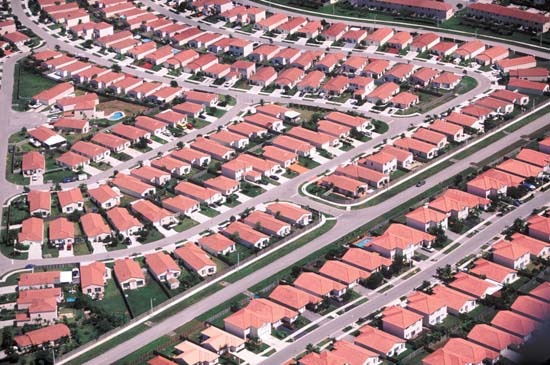
urban-sprawl-florida.jpg

Pleasantville.


That's not very pleasant.


Ma eyes... zee goggools do nuting.
 
Wow, I'm amazed at the replies to such a simple question, even from the educated. What are our kids being taught?

Instead of googling and listening to teachers and professors that have never lived in the real world, think about the question?

It's very simple.....

Think about the choices

1) inflation
2) deflation
3) Stagnation

What happens in each situation?

seems a very vague post designed to imply more knowledge that actually exists.

I presume this chap has now since had to hand in his essay - wonder how he did - but the question was why do we need it, not how to rhyme words with it.
 
we dont need it.

However govts love it given it gives them extra revenue due to bracket creep and deflates in real terms the massive debts they love to incur.

The two central banks that have been the most serious re inflation over the last few decades have been the Bund and the Swiss central bank. Sound money didnt kill their living standards.
 
seems a very vague post designed to imply more knowledge that actually exists.

Sounds like a description of most of the posts on this thread.

I presume this chap has now since had to hand in his essay - wonder how he did - but the question was why do we need it, not how to rhyme words with it.

There was no essay, my arrogant and misguided friend.

The questions I asked were intended to test the levels of understanding of a pretty interesting topic amongst the 'money' concerned folk of flogfooty.

If you look at the original post, you'll note that the majority of my questions went completely unanswered.
 

Remove this Banner Ad

I guess I see it as inflation is a byproduct of a growing economy. We want the economy to grow so we aim for a positive inflation figure. If we had a zero inflation figure, our economy would be stagnant. But that's probably a very simplistic view on it, there'd be a lot of other factors in play.
 
Looking at the question even more simpler:

If we had the opposite, deflation, then the money I have today will be worth more tomorrow.

Therefore any non necesseties (the plasma, holidays, clothes etc) I will put off purchasing for as long as I can. My $1,000 today will have the buying power of $1,050 in a years time.

Now if most folk had the same idea as me, everyone cuts spending, the economy would spiral downwards and out of control into a massive recession.

Is my logic flawed?
 
Is my logic flawed?

Seems fine to me.

I have a question. When someone says the solution to our economic ills is to "print more money" it is roundly condemned as inflationary.

Now I understand that increasing the money supply (whether by tax cuts or interest rate cuts) is inflationary, but someone need to explain to me how simply "printing more money" is inflationary.

Is it implicit in this phrase that it means increasing the money supply?
 
Looking at the question even more simpler:

If we had the opposite, deflation, then the money I have today will be worth more tomorrow.

Therefore any non necesseties (the plasma, holidays, clothes etc) I will put off purchasing for as long as I can. My $1,000 today will have the buying power of $1,050 in a years time.

Now if most folk had the same idea as me, everyone cuts spending, the economy would spiral downwards and out of control into a massive recession.

Is my logic flawed?

Except everyone loses their jobs.

And any mortgage you have becomes more expensive.

Companies that provide essential needs like say, food, will need to make more money now to repay their debts faster - because the value of the debt is ever-increasing, so they up their prices. A shitload of people are out of work to start with, and can't eat.

The government recieves much less in tax dollars, and can't provide assistance.

We starve to death.

Yeah, your logic is pretty shit really.

Deflation and inflation aren't things we decide we need. They're products of a capitalist economy. It's like asking if we need wind. We probably don't NEED it but we sure as hell can't get rid of it.
 
Seems fine to me.

I have a question. When someone says the solution to our economic ills is to "print more money" it is roundly condemned as inflationary.

Now I understand that increasing the money supply (whether by tax cuts or interest rate cuts) is inflationary, but someone need to explain to me how simply "printing more money" is inflationary.

Is it implicit in this phrase that it means increasing the money supply?

I might be wrong but for all countries except the US currency is indexed against gold. So printing more money doesn't mean we have more gold, it just means we have more notes, spread out across the same value of gold.

Money isn't something in and of itself, its representative of a certain value. So printing more money diminishes the value of the existing money.

I'm not sure if its as simple as that. But then, I have no interest in gold.

As Warren Buffet once said "I don't' understand it, we spend hundreds of millions of dollars digging it out of the ground, then we put it in a room and spend millions more protecting it. It's absolutely useless"
 
I might be wrong but for all countries except the US currency is indexed against gold. So printing more money doesn't mean we have more gold, it just means we have more notes, spread out across the same value of gold.

Money isn't something in and of itself, its representative of a certain value. So printing more money diminishes the value of the existing money.

I think you may be wrong. Most countries have floating currencies that mean currencies are determined by a process that I have simply no idea about, and arent indexed to gold.

can you explain what you mean by this?

And any mortgage you have becomes more expensive.
 

🥰 Love BigFooty? Join now for free.

So printing more money diminishes the value of the existing money.

This is true, but I'm not sure why.

I was reading how more US dollars on circulation mean the value of the US dollar depreciates.

Now obviously the more supply of a commodity there is, then's value decreases.

But paper money is not a commodity. Anybody able to explain?
 
I think you may be wrong. Most countries have floating currencies that mean currencies are determined by a process that I have simply no idea about, and arent indexed to gold.

Thought I might be off - it probably has more to do with exporting/importing. So if you increase liquidity (available cash) domestically it doesn't change the fact that Australia's economy is only worth a certain amount.

Money is just a representation of worth.

can you explain what you mean by this?

Its simple, if the economy is deflating and will rise later, the value of any loan that a business or individual holds it actually going to be worth MORE in value in future (i.e. by the time they get around to paying it off).

I mean, a 400,000 mortgage might sound like a lot now, but in ten years time you'd rightfully expect to be earning double what you're earning now. If we had deflation the reverse would be true. So a 400,000 loan would be roughly worth 800,000 in ten years time.

You'd still make repayments of course, but in the earlier stages of the loan you're paying off more interest than anything. Not to mention, if we were in deflation, interest rates would be close to zero, if not in the negative.
 
This is true, but I'm not sure why.

I was reading how more US dollars on circulation mean the value of the US dollar depreciates.

Now obviously the more supply of a commodity there is, then's value decreases.

But paper money is not a commodity. Anybody able to explain?

Well currency's are usually compared with each other right?

So say an Australian dollar is worth 80 cents American. Its not like we're saying the physically coins we use are worth 20% less than an American paper dollar.

We're saying that the Australian economy is worth a certain amount in comparison to the American economy.

Increasing the physical dollars in circulation affects the exchange rate.
 
I might be wrong but for all countries except the US currency is indexed against gold. So printing more money doesn't mean we have more gold, it just means we have more notes, spread out across the same value of gold.

Money isn't something in and of itself, its representative of a certain value. So printing more money diminishes the value of the existing money.

I'm not sure if its as simple as that. But then, I have no interest in gold.

As Warren Buffet once said "I don't' understand it, we spend hundreds of millions of dollars digging it out of the ground, then we put it in a room and spend millions more protecting it. It's absolutely useless"

You really are an idiot.
 
Don't encourage him :D

Thanks for quoting that, I've got him on ignore so hadn't seen it.

I'm pretty sure the first words I said in that post where "I might be wrong" meaning I wasn't sure what I was saying was correct.

There's nothing bad about being prepared to be wrong in order to learn something new.

Now the OP of this thread of course, is just quite clearly ignorant of a lot of things, but I don't particularly like the way people have paid out on him for it. At least he's sticking his neck out and asking a question, quite clearly not ashamed to be ridiculed for his blatant lack of knowledge. This is to be commended imo.

Of course, the idea of HIM calling ME an idiot when you consider his first post in this thread, is really quite funny!
 

Remove this Banner Ad

Remove this Banner Ad

🥰 Love BigFooty? Join now for free.

Back
Top Bottom