





You mean not having enough Marxist lecturers & Themes in universities is a good thing?Oh no, how terrible!
Imagine free tertiary education
You know, like we used to have
Navigation
Install the app
How to install the app on iOS
Follow along with the video below to see how to install our site as a web app on your home screen.
Note: This feature may not be available in some browsers.
More options
-
 BigFooty AFLW Notice Img
AFLW 2025 - AFLW Trade and Draft - All the player moves
-
Mobile App Discontinued
Due to a number of factors, support for the current BigFooty mobile app has been discontinued. Your BigFooty login will no longer work on the Tapatalk or the BigFooty App - which is based on Tapatalk.
Apologies for any inconvenience. We will try to find a replacement.
You are using an out of date browser. It may not display this or other websites correctly.
You should upgrade or use an alternative browser.
You should upgrade or use an alternative browser.
The Greens
- Thread starter Herzog
- Start date
- Tagged users None
🥰 Love BigFooty? Join now for free.


New bot accounts picking Tasmania as their team are not all obvious.You mean not having enough Marxist lecturers & Themes in universities is a good thing?


Ticky009
Moderator


- Jun 2, 2014
- 26,842
- 70,545
- AFL Club
- Sydney
- Other Teams
- The Rebel Alliance
- Moderator
- #5,278
Its a huge issue in the Western world now. Right wing agenda constantly put forward in all forms of media - need any left leaning types to get their act into gear - if there are any left.Willing media largely owned by billionaires who position the greens as far left extremists
Nothing beats a declining nation and Marxist potato’s coming out of university belong a theory that has been tried and trialed 20 plus times and never worked so the communists just take charge of a nation running the global capitalist system that produces record amount of billionairesNew bot accounts picking Tasmania as their team are not all obvious.

Log in to remove this Banner Ad
Ironic multinationals tech, oil, mining and most billionaires push the left wing agenda in the west and rest of the world they just laugh and ignore the green agendaIt’s a huge issue in the Western world now. Right wing agenda constantly put forward in all forms of media - need any left leaning types to get their act into gear - if there are any left.


- Mar 16, 2002
- 24,842
- 16,512
- AFL Club
- Richmond
- Other Teams
- Richmond
You sound so worldly…. Teach us wise one.Ironic multinationals tech, oil, mining and most billionaires push the left wing agenda in the west and rest of the world they just laugh and ignore the green agenda

Ironic multinationals tech, oil, mining and most billionaires push the left wing agenda in the west and rest of the world they just laugh and ignore the green agenda
ah yes the big business elites and their.... marxism

Nothing beats a declining nation and Marxist potato’s coming out of university belong a theory that has been tried and trialed 20 plus times and never worked so the communists just take charge of a nation running the global capitalist system that produces record amount of billionaires [emoji1303]
Temu ChatGPT really producing the goods.
Maybe get your Temu ChatGPT to read some history books and books of significants and you might learn some thingsTemu ChatGPT really producing the goods.
Maybe get your Temu ChatGPT to read some history books and books of significants and you might learn some things
Yeah, this one is too easy. I'll leave it for others to have fun.


The policies the Greens are proposing are the same as the ones being used in Scandanavia to great success (increasing living standards, actual houses being affordable). The ones the Libs and ALP are spruiking are increasing inequality in every country they're being implemented (UK, US, Australia) and the subsequent problems of inequality (housing affordability, declining living standards).
It's reactionaries who are the ones who post trickle-down economic "theories" as the solution to problems, when evidence shows they don't work anywhere at any time.
Trump's reactionary economic "theories" like protectionism and trickle-down economics are proving to be great failures, despite drastic efforts to deny the facts by compliant media. Hell, even the stock market doesn't like Trump's form of economic "theory".
It's reactionaries who are the ones who post trickle-down economic "theories" as the solution to problems, when evidence shows they don't work anywhere at any time.
Trump's reactionary economic "theories" like protectionism and trickle-down economics are proving to be great failures, despite drastic efforts to deny the facts by compliant media. Hell, even the stock market doesn't like Trump's form of economic "theory".
Oh no, how terrible!
Imagine free tertiary education
You know, like we used to have
Context is probably important here.
4% of school leavers attended university before Whitlam made it free.
Following it, it rose to 12% quickly.
We now sit at 42%.
His initial policy was as much an economic policy as it was a social policy like it is treated now.
Given the low %'s initially, it was extremely clever policy that had a multiplier effect for economic growth.
Massively increased productivity against the levels of the day. Increased consumption as it was cheaper. It also increased government spending in universities etc. All factors of aggregate demand.
None of those are factors really anymore given how well trained the population generally is.
There's still huge investment in University funding from the government.
There's $80b in outstanding student HECs debt, so that should put it in perspective of current cost in real terms.
It would obviously help with consumption. But im not sure there's a lack of accessibility to university as it is with the HECS loan system.
It would probably have to come at the expense of another social initiative. It's introduction would probably be 3-4x more costly than annual Aged Care costs, or twice as costly as Child Care subsidies.
Economic benefit for consumption is debatable. So really just needs to be treated as a social cost.


Gralin
Admin


- Admin
- #5,288
Universities weren't run as profit centres then eitherContext is probably important here.
4% of school leavers attended university before Whitlam made it free.
Following it, it rose to 12% quickly.
We now sit at 42%.
His initial policy was as much an economic policy as it was a social policy like it is treated now.
Given the low %'s initially, it was extremely clever policy that had a multiplier effect for economic growth.
Massively increased productivity against the levels of the day. Increased consumption as it was cheaper. It also increased government spending in universities etc. All factors of aggregate demand.
None of those are factors really anymore given how well trained the population generally is.
There's still huge investment in University funding from the government.
There's $80b in outstanding student HECs debt, so that should put it in perspective of current cost in real terms.
It would obviously help with consumption. But im not sure there's a lack of accessibility to university as it is with the HECS loan system.
It would probably have to come at the expense of another social initiative. It's introduction would probably be 3-4x more costly than annual Aged Care costs, or twice as costly as Child Care subsidies.
Economic benefit for consumption is debatable. So really just needs to be treated as a social cost.
There are plenty of people that went to uni who aren't making enough to pay off their student debt so their number keeps going up, especially in the last couple of years
There is also the fact that they don't have to take the money from other social services
There are plenty of other ways to balance the budget
Childcare would be cheaper if it was government run and not for profit, same with aged care
It's amazing how many social services are for profit and still get tax payer money
Imagine if instead of subsidizing corporate profits we just cut them out
- Mar 16, 2002
- 24,842
- 16,512
- AFL Club
- Richmond
- Other Teams
- Richmond
Context is probably important here.
4% of school leavers attended university before Whitlam made it free.
Following it, it rose to 12% quickly.
We now sit at 42%.
His initial policy was as much an economic policy as it was a social policy like it is treated now.
Given the low %'s initially, it was extremely clever policy that had a multiplier effect for economic growth.
Massively increased productivity against the levels of the day. Increased consumption as it was cheaper. It also increased government spending in universities etc. All factors of aggregate demand.
None of those are factors really anymore given how well trained the population generally is.
There's still huge investment in University funding from the government.
There's $80b in outstanding student HECs debt, so that should put it in perspective of current cost in real terms.
It would obviously help with consumption. But im not sure there's a lack of accessibility to university as it is with the HECS loan system.
It would probably have to come at the expense of another social initiative. It's introduction would probably be 3-4x more costly than annual Aged Care costs, or twice as costly as Child Care subsidies.
Economic benefit for consumption is debatable. So really just needs to be treated as a social cost.
Just tax the resource sector … is not hard
We're now in a service economy. Pre-Whitlam we were very manufacturing and primary industries focused.Context is probably important here.
4% of school leavers attended university before Whitlam made it free.
Following it, it rose to 12% quickly.
We now sit at 42%.
His initial policy was as much an economic policy as it was a social policy like it is treated now.
Given the low %'s initially, it was extremely clever policy that had a multiplier effect for economic growth.
Massively increased productivity against the levels of the day. Increased consumption as it was cheaper. It also increased government spending in universities etc. All factors of aggregate demand.
None of those are factors really anymore given how well trained the population generally is.
There's still huge investment in University funding from the government.
There's $80b in outstanding student HECs debt, so that should put it in perspective of current cost in real terms.
It would obviously help with consumption. But im not sure there's a lack of accessibility to university as it is with the HECS loan system.
It would probably have to come at the expense of another social initiative. It's introduction would probably be 3-4x more costly than annual Aged Care costs, or twice as costly as Child Care subsidies.
Economic benefit for consumption is debatable. So really just needs to be treated as a social cost.
You need a Uni degree to be a teacher or nurse and for most office jobs, tech jobs and even to progress in things like performing arts.
I would guess the % of jobs requiring a Uni degree has increased at about the same rate as the number of people attending Uni.
We're now in a service economy. Pre-Whitlam we were very manufacturing and primary industries focused.
You need a Uni degree to be a teacher or nurse and for most office jobs, tech jobs and even to progress in things like performing arts.
I would guess the % of jobs requiring a Uni degree has increased at about the same rate as the number of people attending Uni.
I agree with you.
Degree inflation is very real. We’re seeing more roles require degrees simply because they can, not necessarily because they require higher academic skillsets. That suggests part of the solution isn’t just funding more places, but ensuring better alignment between employability and economic need.
Productivity return on further general university expansion may be far lower than it was in the 70s or 90s. This doesn’t mean education isn’t valuable.
Just that the ROI in economic terms becomes more complex. It might be smarter now to target investment into areas like tech capability, digital infrastructure, and industry-linked vocational upskilling, rather than current broad based free for all like the current HECS model.
This is probably about finding the balance between fairness and freedom of choice, and between social equity and economic efficiency. Not an easy trade off.
Some will have other views, but the economy is in a precarious position and in transition, so is an important decision. As education is one of the few places we get bang for our buck generally.
This is only if you see education as a means to employment in a specific field.I agree with you.
Degree inflation is very real. We’re seeing more roles require degrees simply because they can, not necessarily because they require higher academic skillsets. That suggests part of the solution isn’t just funding more places, but ensuring better alignment between employability and economic need.
Productivity return on further general university expansion may be far lower than it was in the 70s or 90s. This doesn’t mean education isn’t valuable.
Just that the ROI in economic terms becomes more complex. It might be smarter now to target investment into areas like tech capability, digital infrastructure, and industry-linked vocational upskilling, rather than current broad based free for all like the current HECS model.
This is probably about finding the balance between fairness and freedom of choice, and between social equity and economic efficiency. Not an easy trade off.
Some will have other views, but the economy is in a precarious position and in transition, so is an important decision. As education is one of the few places we get bang for our buck generally.
If you want higher education to include more well-rounded education in general and not just job training, then it should be approached differently.
a nurse use to be more of a traineeship back in those days that changed through out the 90s to become the university degree that it is todayWe're now in a service economy. Pre-Whitlam we were very manufacturing and primary industries focused.
You need a Uni degree to be a teacher or nurse and for most office jobs, tech jobs and even to progress in things like performing arts.
I would guess the % of jobs requiring a Uni degree has increased at about the same rate as the number of people attending Uni.
destroying the manufacturing and local jobs market was Whitlem with the signing of the LIMA declaration not sure if that was one of the reasons for his sacking but maybe it was the reason for the free university to educate the people for the fu
Transcript 3723 | PM Transcripts


I dont get to vote as I don't live in Aus anymore, but when I did I always put them 1. I'm sure I have a ton of post history on here saying as such too so I'm not making shit up.
But I will never, wver do that again once I move back. They ****ed up the ETS, and this time around they ****ed up public housing. If I wanted a party who would shut down any landmark social or environmental progressiveness, then I'd vote One Nation. At least they aren't pretending they give a shit about it.
Never, ever again.
But I will never, wver do that again once I move back. They ****ed up the ETS, and this time around they ****ed up public housing. If I wanted a party who would shut down any landmark social or environmental progressiveness, then I'd vote One Nation. At least they aren't pretending they give a shit about it.
Never, ever again.
🥰 Love BigFooty? Join now for free.
Gralin
Admin
- Admin
- #5,295
How did the greens **** public housing?
The stat governments are the ones selling off public housing to developers to be replaced not with new public housing and the program Federal labor setup doesn't guarantee to build or buy any public housing either
instead its grants to build social and affordable housing
Labor don't want to fix public housing anymore than the coalition do, but of course they blame the greens
The stat governments are the ones selling off public housing to developers to be replaced not with new public housing and the program Federal labor setup doesn't guarantee to build or buy any public housing either
instead its grants to build social and affordable housing
Labor don't want to fix public housing anymore than the coalition do, but of course they blame the greens
the ones that scresm the loudest are usually the biggest hypocrite
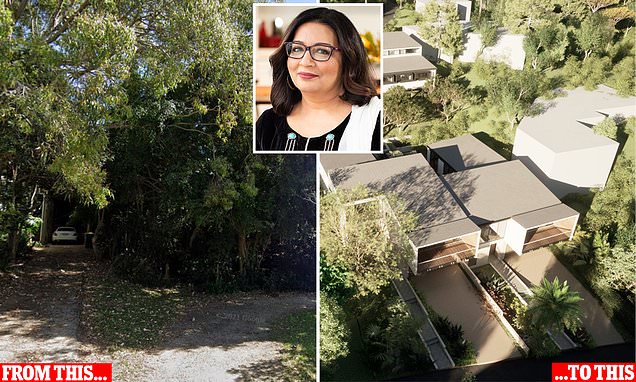
A Greens senator is planning to bulldoze dozens of native trees and local flora around her investment property in order to build three luxury homes at the heart of one of the biggest koala habitats in the state.
The party's deputy leader Mehreen Faruqi and her husband will knock down 20 trees at her investment property in Port Macquarie on the northern NSW coast and subdivide it to build three double-storey townhouses.
The couple paid $250,000 for the home in 2001, with houses now being sold in the upmarket area of the town for well over $1million.
A development application approved by the Port Macquarie Hastings Council in May estimated the cost of the development of the property for $1.5million.
The architecturally designed plans will require the removal of most of the trees at the property including a hollow-bearing tree, which provides a habitat for native animals, council documents said.
 www.dailymail.co.uk
A Greens senator is planning to bulldoze dozens of native trees and local flora around her investment property in order to build three luxury homes at the heart of one of the biggest koala habitats in the state.
The party's deputy leader Mehreen Faruqi and her husband will knock down 20 trees at her investment property in Port Macquarie on the northern NSW coast and subdivide it to build three double-storey townhouses.
The couple paid $250,000 for the home in 2001, with houses now being sold in the upmarket area of the town for well over $1million.
A development application approved by the Port Macquarie Hastings Council in May estimated the cost of the development of the property for $1.5million.
The architecturally designed plans will require the removal of most of the trees at the property including a hollow-bearing tree, which provides a habitat for native animals, council documents said.
Greens MP will bulldoze 20 native trees to add three luxury townhouses
A Greens senator is planning to bulldoze dozens of native trees and local flora around her investment property in order to build luxury homes to expand her property portfolio.
Of the 227 sitting MPs and senators, only 12 declared no property ownership.
This group includes Greens housing spokesperson Max Chandler-Mather, who often uses his status as one of parliament’s few renters to draw a contrast with others in the parliament.
His Greens colleague Stephen Bates, the parliament’s youngest MP, joins him in rare company, as does Labor’s Josh Burns, who recently sold a house he had co-owned with a partner.
Several senators are on the list, although we cannot be sure this provides an exhaustive picture because the property holdings of senators’ spouses are not published.
And in any case, we can’t be sure how many of the 11 are renters — only that they don’t own properties in their own names.
Some in this group declared a financial interest in trusts but were not required to disclose any property held in those trusts.
And the United Australia Party’s Ralph Babet has not declared any properties owned in his own name but owns a share of a real estate company called Babet Brothers.
He appears with his brother, Matt, in advertising materials for Babet Brothers that state the pair “live and breathe real estate” as an “obsession”, and that they have acquired “multiple investment properties of their own”.
Queensland MP Bob Katter declared part ownership of a rental property but added a handwritten note stating the property had been sold.
Mr Katter noted his wife “has at times bought and sold some investment properties” but that “she regards this as her private business”.
He also declared his ownership of 100 heifers in Cape York and a mining investment — “nothing definite at this stage but I intend to take up old mining tenements discovered by myself prior to going into Parliament,” he clarified.
https://www.abc.net.au/news/104477056

 www.abc.net.au
This group includes Greens housing spokesperson Max Chandler-Mather, who often uses his status as one of parliament’s few renters to draw a contrast with others in the parliament.
His Greens colleague Stephen Bates, the parliament’s youngest MP, joins him in rare company, as does Labor’s Josh Burns, who recently sold a house he had co-owned with a partner.
Several senators are on the list, although we cannot be sure this provides an exhaustive picture because the property holdings of senators’ spouses are not published.
And in any case, we can’t be sure how many of the 11 are renters — only that they don’t own properties in their own names.
Some in this group declared a financial interest in trusts but were not required to disclose any property held in those trusts.
And the United Australia Party’s Ralph Babet has not declared any properties owned in his own name but owns a share of a real estate company called Babet Brothers.
He appears with his brother, Matt, in advertising materials for Babet Brothers that state the pair “live and breathe real estate” as an “obsession”, and that they have acquired “multiple investment properties of their own”.
Queensland MP Bob Katter declared part ownership of a rental property but added a handwritten note stating the property had been sold.
Mr Katter noted his wife “has at times bought and sold some investment properties” but that “she regards this as her private business”.
He also declared his ownership of 100 heifers in Cape York and a mining investment — “nothing definite at this stage but I intend to take up old mining tenements discovered by myself prior to going into Parliament,” he clarified.
https://www.abc.net.au/news/104477056
As the PM's 'clifftop' home raises eyebrows, explore the property portfolios of all federal politicians
The prime minister's seaside property purchase raised eyebrows, but many politicians have larger property holdings.
www.abc.net.au
Gralin
Admin
- Admin
- #5,298
2023 news already been discussed in 2023the ones that scresm the loudest are usually the biggest hypocrite
A Greens senator is planning to bulldoze dozens of native trees and local flora around her investment property in order to build three luxury homes at the heart of one of the biggest koala habitats in the state.
The party's deputy leader Mehreen Faruqi and her husband will knock down 20 trees at her investment property in Port Macquarie on the northern NSW coast and subdivide it to build three double-storey townhouses.
The couple paid $250,000 for the home in 2001, with houses now being sold in the upmarket area of the town for well over $1million.
A development application approved by the Port Macquarie Hastings Council in May estimated the cost of the development of the property for $1.5million.
The architecturally designed plans will require the removal of most of the trees at the property including a hollow-bearing tree, which provides a habitat for native animals, council documents said.
Greens MP will bulldoze 20 native trees to add three luxury townhouses
A Greens senator is planning to bulldoze dozens of native trees and local flora around her investment property in order to build luxury homes to expand her property portfolio.
how about this one from 2024?2023 news already been discussed in 2023

the point is none of them care even the ones who scream and virtual signal the loudest
Greens deputy leader Mehreen Faruqi is set to reap an $850,000 windfall from an upcoming property sale from her multimillion-dollar housing portfolio.
The NSW Senator, who with her party is openly critical of government policies supporting 'wealthy property investors', appears to be quite a savvy investor herself.
Property records show that Ms Faruqi, who has blasted the unaffordability of homes in Australia, is selling a property in Port Macquarie, on the NSW north coast, with a price guide of $1,000,000 to $1,100,000.
She and her husband bought the four bedroom home for $250,000 in 2001. It went on the market in May, setting up the opportunity for a sizeable six-figure profit.
Ms Faruqi also makes $750-a-week from a three-bedroom house she rents at Beaconsfield, in Sydney's inner-south. She paid just $193,000 for that property in 1996.
And she owns a 500-metre-squared parcel of land in Lahore, a city in northern Pakistan, plus a four-bedroom residential property in an inner Sydney suburb, where the average property is worth $2.5million. That home was bought for an undisclosed sum in 2007.
Ms Faruqi's property portfolio has come under fire by conservative lobby group Advance Australia, which labelled her 'just another politician, riding on her high horse about the housing affordability crisis while doing nothing about it and banking a fortune'.

She slammed Australia's housing system. She's poised to make megabucks
Greens senator Mehreen Faruqi said Australia's housing system profits from 'the misery of others'. Meanwhile, she is making millions from her own investment properties.
Gralin
Admin
- Admin
- #5,300
lol Advance Australiahow about this one from 2024?
the point is none of them care even the ones who scream and virtual signal the loudest
Greens deputy leader Mehreen Faruqi is set to reap an $850,000 windfall from an upcoming property sale from her multimillion-dollar housing portfolio.
The NSW Senator, who with her party is openly critical of government policies supporting 'wealthy property investors', appears to be quite a savvy investor herself.
Property records show that Ms Faruqi, who has blasted the unaffordability of homes in Australia, is selling a property in Port Macquarie, on the NSW north coast, with a price guide of $1,000,000 to $1,100,000.
She and her husband bought the four bedroom home for $250,000 in 2001. It went on the market in May, setting up the opportunity for a sizeable six-figure profit.
Ms Faruqi also makes $750-a-week from a three-bedroom house she rents at Beaconsfield, in Sydney's inner-south. She paid just $193,000 for that property in 1996.
And she owns a 500-metre-squared parcel of land in Lahore, a city in northern Pakistan, plus a four-bedroom residential property in an inner Sydney suburb, where the average property is worth $2.5million. That home was bought for an undisclosed sum in 2007.
Ms Faruqi's property portfolio has come under fire by conservative lobby group Advance Australia, which labelled her 'just another politician, riding on her high horse about the housing affordability crisis while doing nothing about it and banking a fortune'.
She slammed Australia's housing system. She's poised to make megabucks
Greens senator Mehreen Faruqi said Australia's housing system profits from 'the misery of others'. Meanwhile, she is making millions from her own investment properties.
gee I wonder why they are going after Faruqi specifically
Of course its a massive conflict of interest that politicans are landlords and also responsible for the legislation that benefits landlords
the greens aren't going to solve the problems of capitalism because they are a party that supports capitalism but at least they understand the social contract and push for things like public housing and rent freezes which would help people
of course the landlords dont want that so anything to point to so you can say the greens are just as big a bunch of hypocrits so we don't have to listen to anything they say (while being strangely silent about the landlords that want better conditions for landlords)
Similar threads


- Replies
- 44
- Views
- 966


- Replies
- 3
- Views
- 387


- Replies
- 103
- Views
- 4K

