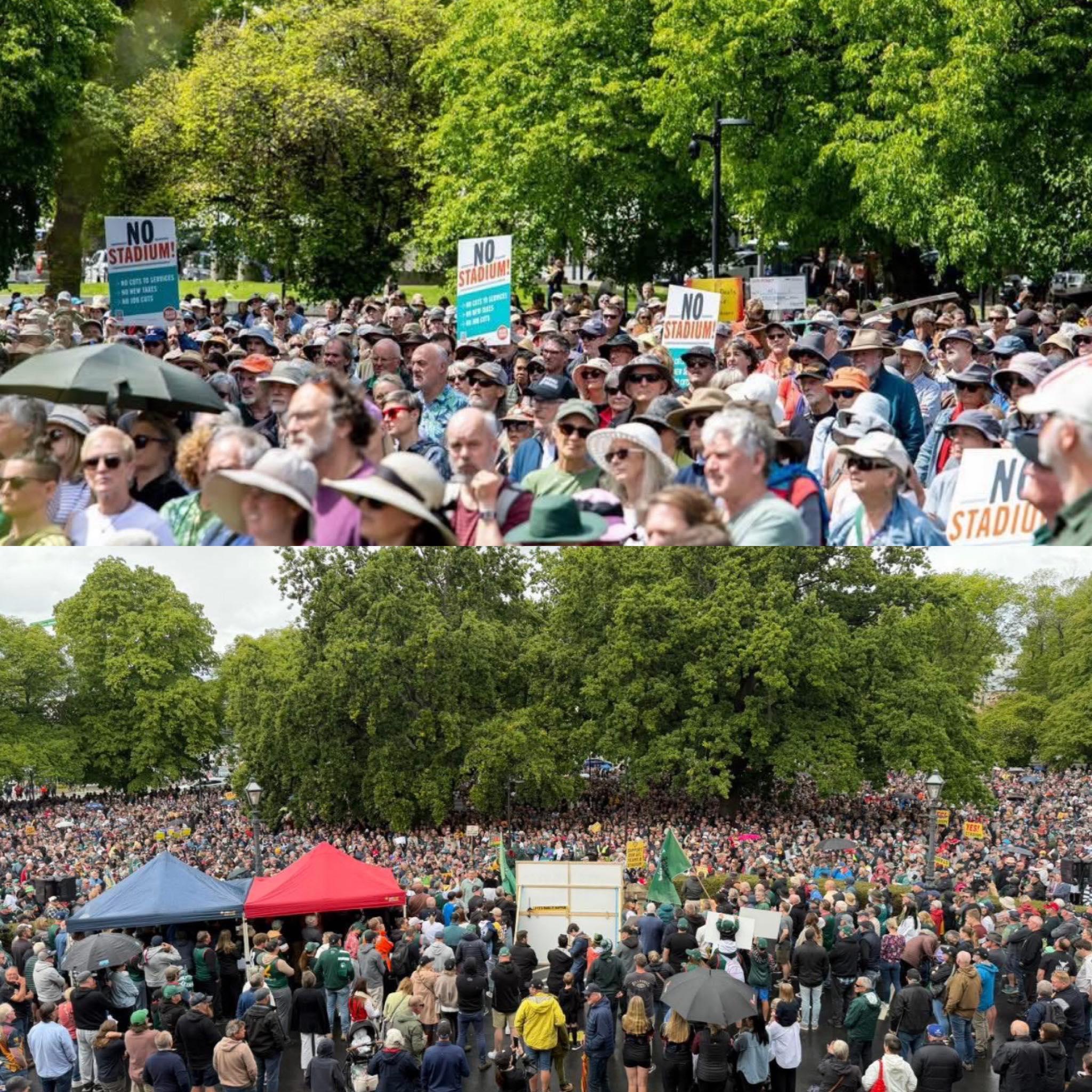



That's superbly argued. To put it bluntly - if o e wants a good health car system, you must also have a strong economy to support it (economics 101). To neglect the economy and business and put all your expenditure both capital and on-going (which are two very different beasts which too few appreciate) is to go into an ever increasing financial death-spiral.The issue with this line of thinking is that it will take an endless well of money to fix the "perceived" tangible element of healthcare, because unless you throw an unrealistic, undemocratic amount of money that the mainland would never pay, Tasmania's health outcomes will never be on level pegging with the mainland.
So you build a few more hospitals that fixes up the fact that people might get a bit better care in the short-term. But then as Tasmania ages faster than the mainland and young people that could have been the ones to be a tax and caring base for the elderly move to the mainland - then what? You still have the need for ever more hospital beds and and a structure of the economy that can't support it other than an ever increasing unsustainable amount of money being thrown at the problem.
In order to "fix" the health crisis the only solution people would have, is to what, spend tens of thousands of dollars convincing mainland nurses to relocate to (or not move away from) to Tasmania, and once you're doing that, you may as well achieve that indirectly by spending the money on the team and stadium which will convince people to move/stay to Tasmania because they like the fact they have a football team to support and concerts to go to.
The Tasmanian expat community is a lot bigger in Melbourne than the rest of the country (for obvious reasons) both me and my friends/family know a lot of Tasmanians who have had to leave the mainland.
Over 5,000 20-34 year olds leave Tasmania every year, of the 15,000 that do leave, and while similar numbers to return to the state, it's much older, such as returning older Tasmanians and retirees who are much more likely to interact with their health system - but you don't have the university-educated 20-34 year old workforce individuals that are the ones that bear the brunt of driving our economy forward so we do have a healthcare and pension system for older people, who are found in Tasmania.
I think the cultural benefits of having a football team in Tasmania - keeping in mind that as many as 4% of the country has purchased an AFL membership and a majority of Tasmanians watch some AFL on TV every year - cannot be overstated as an influence in changing the structure of society and economy in Tasmania. This is especially so as Tasmania is still very much an Anglo-Celtic society, as the mainland's demographics changes and the AFL understands that it needs to break into these communities that have no generational association with the game, this is not the case with Tasmania, the team will activate a lot of latent AFL support among non-immigrant communities that are generationally tied to the sport in the opposite way that e.g. the Dogs have struggled with with the Vietnamese community in Footscray.
Tasmania is in desperate need of the economic boost the new stadium will bring. Otherwise it risks sliding into a glorified retirement village - it's already attracting many retirees from Melbourne and Sydney, even while,its youth head to the mainland. This is a recipe for further decline and would ultimately make the funding adequate healthcare impossible.
So to claim that capital expenditure on assets that increases jobs and opportunities for working age people somehow is at the expense of proper healthcare is not only wrong, but diametrically opposite of the truth.