- Joined
- Feb 23, 2001
- Posts
- 4,147
- Reaction score
- 1,343
- Location
- a van down by the river
- AFL Club
- Gold Coast
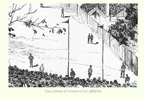
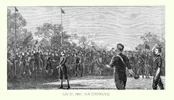
Ariel ping pong (1930s?)
Follow along with the video below to see how to install our site as a web app on your home screen.
Note: This feature may not be available in some browsers.


Yeah I was not clear enough in answering - with the question of what was used in the US or UK I was thinking of international terminology, and in a number of Romance languages the term used translates to Australian football, but I should have specified that. There may also be other variants of the name in other languages as well - checking the wikipedia page in other languages and using google translate as necessary would be one way to confirm that. Australian newspapers referring to early tours of the US and Canada also seem to often call it "the Australian game", "the Australian game of football", or occasionally "Australian football", but I haven't read any coverage of those tours in American or Canadian papers, so while anyone who encountered the sport that way may have called it by these names rather than devising a new exonym, I don't actually know what terms they used.I remember Aussie Rules (Ou-ssie Roouls) being the common term not so much Australian football
Think we've been over this topic

Log in to remove this Banner Ad


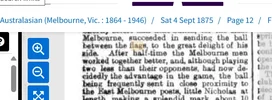
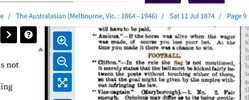
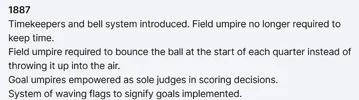
The AFL website has this: https://www.afl.com.au/about-afl/history/rule-changesAny information available on introduction of goal umpires waving flags after goals and behinds are scored?
Wikipedia states northern Tasmanian association introduced it in 1884 but don’t know where they got that from.
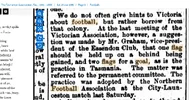
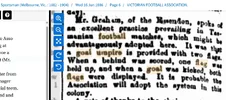
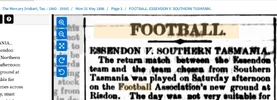
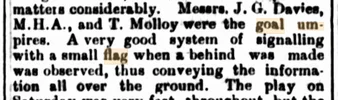
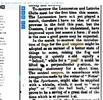
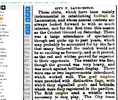
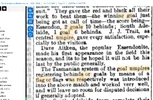
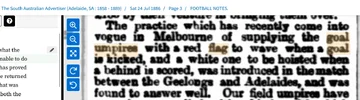
It looks as if the flags must have just sat there, attached to the goalposts, in the very early days of the game and it wasn't until later that the idea of getting goal umpires to wave them came in:
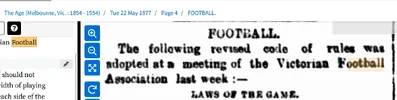
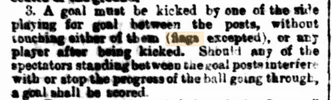
Yeah, that's about the only thing that makes sense to me - having something so the players could look downfield and know what they're supposed to be aiming at!Suppose, if your playing "rolling mob football rules" in the parklands of 1860
you've gotta know which trees are the goals, so you'd hammer a flag in them

Still better technology then the current score review processYeah, that's about the only thing that makes sense to me - having something so the players could look downfield and know what they're supposed to be aiming at!
Source ?Suppose, if your playing "rolling mob football rules" in the parklands of 1860
you've gotta know which trees are the goals, so you'd hammer a flag in them


Quickest answer would be because it was based off an Indigenous game played in the Kulin Nation - which surrounds MelbourneNot sure if this a small question as such but are there any explanations why Aussie rules developed out of Melbourne/Victoria rather than say Adelaide/SA or Sydney/NSW?
Is there anything specific regarding the conditions in Melb/Vic that fostered a unique/distinct code of football to develop.