Navigation
Install the app
How to install the app on iOS
Follow along with the video below to see how to install our site as a web app on your home screen.
Note: This feature may not be available in some browsers.
More options
Style variation

-
 BigFooty Tipping Notice Img
Weekly Prize - Join Any Time - Tip Round 9
The Golden Ticket - Corporate tickets, functions, Open Air Boxes at the Adelaide Oval, ENGIE, Gabba, MCG, Marvel, Optus & People First Stadiums. Corporate Suites at the Gabba, MCG and Marvel.
8 Winner: myblueroan


You are using an out of date browser. It may not display this or other websites correctly.
You should upgrade or use an alternative browser.
You should upgrade or use an alternative browser.
Anthony Albanese - How long? -3-
- Thread starter Chief
- Start date
- Tagged users None
🥰 Love BigFooty? Join now for free.
- Status
- Not open for further replies.


Except that 22% of it is lost as CGT (assuming you made a profit), plus trading fees (usually a very small amount) surely you would be better off if that company invested the money on your behalf, like you bought the share for them to do in the first place?What is wrong with share buy-backs lol? Profits of a company are returned to shareholders (those who own the company - not the employees if that socialist nonsense is what you're getting at) so that they can invest in new and further enterprises? Bizarre take
Sorry, we don't want your investment any more, take it somewhere else.


- Joined
- Apr 29, 2012
- Posts
- 29,501
- Reaction score
- 45,964
- AFL Club
- Carlton
Legitimately it would - a fairer simpler taxation system would provide less incentive for individuals to avoid tax. Plus alternative taxing arrangements than income tax, such as higher consumption taxes like a greater GST would result in all that cash spending - whether it has avoided income tax or not, being subject to tax.FBI thinks high taxes are leading to beauticians driving up inflation by buying luxury cars from the cash economy
also thinks lowering taxes will fix this
Don't make the mistake of thinking there is a coherent or logical point in there
It's no coincidence that where countries have continued to hike taxes on high income earners they actually see a reduction in overall tax received as high income earners leave the country or change to more efficienct tax structure.
It's not outlandish (and instead it is correct to say) that simpler and lower taxation levels would reduce tax avoidance.


- Joined
- Mar 7, 2011
- Posts
- 18,298
- Reaction score
- 30,349
- Location
- Adelaide
- AFL Club
- Sydney
- Other Teams
- Adelaide United, Everton, Socceroos
You're funny. Keep up the comedy.plus the people making decisions in government are, generally speaking, less capable than private sector equivalents because if they were capable they'd be working in an industry other than the public sector - so all government spending is, by definition 'bad'
Log in to remove this Banner Ad
Is this true?
The other way to reduce money in the economy is to increase taxes. Such as reducing the CGT discount for property. Or increasing royalties on mineral extraction, or taxes on minerals sales or reducing superannuation contributions on Super funds over a certain limit.
- Joined
- Apr 29, 2012
- Posts
- 29,501
- Reaction score
- 45,964
- AFL Club
- Carlton
Without getting into that topic - which is a completely separate issue - what is that in relevance to your point about the efficiency of public v private markets? I wasn't suggesting that every share buy back is always good but you raised the topic in a point to say as if share buy backs was some gross misuse of private capital when I can't see how that is the case.Except that 22% of it is lost as CGT (assuming you made a profit), plus trading fees (usually a very small amount) surely you would be better off if that company invested the money on your behalf, like you bought the share for them to do in the first place?
Sorry, we don't want your investment any more, take it somewhere else.
Neither is all public spending, but you just lumped all public spending together, so why can't I lump all private spending together?Without getting into that topic - which is a completely separate issue - what is that in relevance to your point about the efficiency of public v private markets? I wasn't suggesting that every share buy back is always good but you raised the topic in a point to say as if share buy backs was some gross misuse of private capital when I can't see how that is the case.


Ummmmmmmmmm, increasing GST would increase the cash economy, not reduce it. Have you not been watching the tobacco wars?Legitimately it would - a fairer simpler taxation system would provide less incentive for individuals to avoid tax. Plus alternative taxing arrangements than income tax, such as higher consumption taxes like a greater GST would result in all that cash spending - whether it has avoided income tax or not, being subject to tax.
It's no coincidence that where countries have continued to hike taxes on high income earners they actually see a reduction in overall tax received as high income earners leave the country or change to more efficienct tax structure.
It's not outlandish (and instead it is correct to say) that simpler and lower taxation levels would reduce tax avoidance.
Your second example is specific to a couple of (often quoted) examples. Other locations (most of them) raise more money when they raise taxes.


RCAB
Norm Smith Medallist
- Joined
- Jul 25, 2024
- Posts
- 7,583
- Reaction score
- 11,470
- AFL Club
- Hawthorn
Legitimately it would - a fairer simpler taxation system would provide less incentive for individuals to avoid tax. Plus alternative taxing arrangements than income tax, such as higher consumption taxes like a greater GST would result in all that cash spending - whether it has avoided income tax or not, being subject to tax.
It's no coincidence that where countries have continued to hike taxes on high income earners they actually see a reduction in overall tax received as high income earners leave the country or change to more efficienct tax structure.
It's not outlandish (and instead it is correct to say) that simpler and lower taxation levels would reduce tax avoidance.
Isn't reducing taxes to the FBI level a meta-tax avoidance?
- Joined
- Apr 29, 2012
- Posts
- 29,501
- Reaction score
- 45,964
- AFL Club
- Carlton
Because I've already articulated why public spending is bad, because of the inherent lack of checks and balances within the public sector that are not present in the private sector. You articulated no such inherent failure and just pulled a random example out - of which it isn't even an example of 'bad' private sector spending for the reasons I set out earlier.Neither is all public spending, but you just lumped all public spending together, so why can't I lump all private spending together?
- Joined
- Mar 7, 2011
- Posts
- 18,298
- Reaction score
- 30,349
- Location
- Adelaide
- AFL Club
- Sydney
- Other Teams
- Adelaide United, Everton, Socceroos
"Articulated" = "I said so"Because I've already articulated why public spending is bad, because of the inherent lack of checks and balances within the public sector that are not present in the private sector. You articulated no such inherent failure and just pulled a random example out - of which it isn't even an example of 'bad' private sector spending for the reasons I set out earlier.
There are zero checks and balances in privately run companies like Hancock Prospecting or Visy or Linfox. There are far more checks and balances in the public sector than in those companies.Because I've already articulated why public spending is bad, because of the inherent lack of checks and balances within the public sector that are not present in the private sector. You articulated no such inherent failure and just pulled a random example out - of which it isn't even an example of 'bad' private sector spending for the reasons I set out earlier.
- Joined
- Apr 29, 2012
- Posts
- 29,501
- Reaction score
- 45,964
- AFL Club
- Carlton
I would argue not if it was combined with an appropriate reduction in taxation.Ummmmmmmmmm, increasing GST would increase the cash economy, not reduce it. Have you not been watching the tobacco wars?
Your second example is specific to a couple of (often quoted) examples. Other locations (most of them) raise more money when they raise taxes.
If everyone's income tax was reduced say to a flat 20%, while GST was increased to 20% (or some other figure) thrown in with some general reduction in government spending + increases in under realised national natural resources like gas royalties you'll have a situation where tax contributions are relatively balanced / analagous as they are now but individuals have more control over and discretion around their spending.
The avoidance of GST (well not really GST, more the avoidance of excises on 'socially undesirable' products is driven not only by the high rate of excise on those products (which should obviously also be reduced) but on the basis that individuals are generally doing it tough because income taxes in this country are as high as they are and therefore need to take alternate routes given those products have been taxed to an unaffordable level.
Increase the money in individuals pockets after their take home pay and they will be less incentivised to exploit or avoid the system - people will always choose convenience over inconvenience if they have the financial capacity to do so.
Plus going back to the original topic of the discussion - luxury cars, you can't really buy a luxury car from the Chinese deli can you?
- Joined
- Apr 29, 2012
- Posts
- 29,501
- Reaction score
- 45,964
- AFL Club
- Carlton
Lol - okay mate.There are zero checks and balances in privately run companies like Hancock Prospecting or Visy or Linfox. There are far more checks and balances in the public sector than in those companies.
- Joined
- Apr 29, 2012
- Posts
- 29,501
- Reaction score
- 45,964
- AFL Club
- Carlton
Yes, do keep up."Articulated" = "I said so"
RCAB
Norm Smith Medallist
- Joined
- Jul 25, 2024
- Posts
- 7,583
- Reaction score
- 11,470
- AFL Club
- Hawthorn


Its really just a extra tax benefit for boomers - Share buyback usually offer CGT benefits.Except that 22% of it is lost as CGT (assuming you made a profit), plus trading fees (usually a very small amount) surely you would be better off if that company invested the money on your behalf, like you bought the share for them to do in the first place?
Sorry, we don't want your investment any more, take it somewhere else.
compared to a dividend.
Also other side is the rich can control more of the company.
A lot of buy backs buy out small shareholders, and save on correspondance to small shareholders that is not economical.
often this happens before they believe their price may rise.


That would be against nearly all established economic theory that is based on the individual maximising their own utility - rational choice theory. Nothing wrong with avoiding tax... thems the rulesLegitimately it would - a fairer simpler taxation system would provide less incentive for individuals to avoid tax.
🥰 Love BigFooty? Join now for free.
The 2 biggest issues are property and immigration
how to unwind the massive bubble.
Agree that putting most of income towards housing is not great for the economy. lower consumption and lower ivnestment outside of housing.
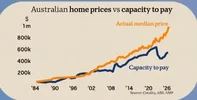
For the nation’s $694,000 average loan, according to the Australian Bureau of Statistics, that means repayments will rise from $4233 a month to $4337.
And they will be paying at least say 5.75% interest so approx $40,000 interest and approx 12,000 against the capital
It has to be crippling those taking out new homes.
how to unwind the massive bubble.
Agree that putting most of income towards housing is not great for the economy. lower consumption and lower ivnestment outside of housing.
For the nation’s $694,000 average loan, according to the Australian Bureau of Statistics, that means repayments will rise from $4233 a month to $4337.
And they will be paying at least say 5.75% interest so approx $40,000 interest and approx 12,000 against the capital
It has to be crippling those taking out new homes.
its like the taxes on Cigarettes forced the average punter into a cash economy black market.It's no coincidence that where countries have continued to hike taxes on high income earners they actually see a reduction in overall tax received as high income earners leave the country or change to more efficienct tax structure.
Crazy that the govt doesn't look at reducing taxes on cigerettes. but instead jsut thinks people are smoking less and the taxes are working.
Less taxes on cigerettes, would actually lift income from the taxes and give users a more reliable product.
I have heard (conspiracy) sources that believe nicotine may be banned all together from 2030.
I don't think less taxes on alcohol would make people drink much more, it's more likely to change what they drink.
younger generation for the most part have now skipped the aussie drinking culture of previous generations.


- Joined
- Sep 15, 2011
- Posts
- 36,486
- Reaction score
- 59,939
- AFL Club
- West Coast
Yes, America's health system shows the superiority of private spending over public spending.Because I've already articulated why public spending is bad, because of the inherent lack of checks and balances within the public sector that are not present in the private sector. You articulated no such inherent failure and just pulled a random example out - of which it isn't even an example of 'bad' private sector spending for the reasons I set out earlier.
As for Labor's spending, it always goes up after years of under-investment from the Coalition.


Pakenhamsaint
TheBrownDog


- Joined
- Jan 5, 2011
- Posts
- 53,399
- Reaction score
- 47,598
- AFL Club
- St Kilda
It does appear that conversation is about to happen.The other way to reduce money in the economy is to increase taxes. Such as reducing the CGT discount for property. Or increasing royalties on mineral extraction, or taxes on minerals sales or reducing superannuation contributions on Super funds over a certain limit.
- Joined
- Apr 29, 2012
- Posts
- 29,501
- Reaction score
- 45,964
- AFL Club
- Carlton
Yawn, do we have to have these arguments over and over again? As to America's health system - it is undoubtedly expensive and ineffectual for low-mildly serious conditions, but it must be said that the majority of pharmaceutical, and medical discoveries come out of the United States, their system proxy props up the rest of the world in terms of research and development of new techniques, technology and pharmaceuticals. There are numerous procedures which can only be done by medical professionals in the US for extremely niche and complicated medical issues. While expensive and inefficient, it does arguably underwrite a substantial portion of the rest of the worlds medical care by taking on that R&D burden - which it is only able to do via its current system. While I would personally prefer to live under a system like Australia's, Australia relies on the US to be able to provide its medical system in the way it does currently.Yes, America's health system shows the superiority of private spending over public spending.
As for Labor's spending, it always goes up after years of under-investment from the Coalition.
"under-investment", as per whose definition? Yours? Laughable.
Labor are going after CGT discount. Will likely lead to less property being sold long term.The other way to reduce money in the economy is to increase taxes. Such as reducing the CGT discount for property. Or increasing royalties on mineral extraction, or taxes on minerals sales or reducing superannuation contributions on Super funds over a certain limit.
(housing stock turnover is already less than 2019, despite more demand)
If it is grandfathered, or if they set a date when the discount dissapears, there may be a heap of properties hit the market.
Increasing taxes on mineral extraction unlikely to reduce money in the economy as most of these companies are foreign owned.
There are already superannuation contribution limits. What did you want to change here?
The most sensible action would be to
remove foreign ownership on existing residential property (students being able to buy housing)
reduce or limit investment in residential property (existing stock) (investors)
limit of 2 properties can negative gear per person.
Thereafter it can only be negative gearing on purchasing new build completions (thus adding to existing stock).
This may actually reduce the need for foreign investment in build to rent schemes as more investment dollars in Au will be directed towards this than driving up existing property and competing with first home buyers.
Also tighter lending rules.
Lift the 5% minimum deposit to 10%
It also may send investors to invest in other things like the commodity super cycle.
Last edited:
- Status
- Not open for further replies.
Similar threads


- Replies
- 114
- Views
- 4K


