Remove this Banner Ad

Play Nice Random Chat Thread: Episode III

🥰 Love BigFooty? Join now for free.

Status
Not open for further replies.
"animal activism comes from the privileged position of affluence"

Correct (although there are plenty of religious people from non affluent societies who adopt these diets to avoid cruelty to animals). But that isn't an argument against it. Humans evolve, our means of production increase and expand, and that frees us up to make conscience based decisions across a whole range of issues, not just diet.
 
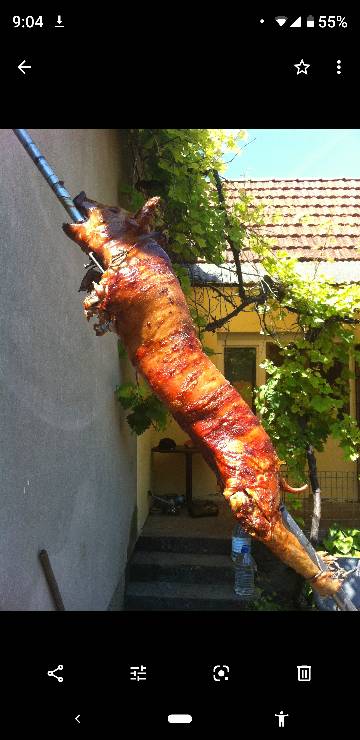
Everytime I visit my relatives in Europe my uncle slaughters a pig that morning from his back yard and spits it over coal fired energy.
A centuries old tradition.

52c8a4477d2ed7c094cd18f5f2b37d4e.jpg


Sent from my Pixel 3 XL using Tapatalk
 
This took longer than l thought;
ABC news -

Hong Kong's property tycoons are hurting, the share market is tanking and the tourism sector has taken a beating as the pro-democracy movement continues to strangle the city.

Key points:
  • Hong Kong's richest person Li Ka-shing has called for an end to the protests
  • The 10 richest people in Hong Kong have lost billions since the protests began in June
  • Hong Kong's economy grew at its slowest annual pace since 2008 in the second quarter
 

Log in to remove this Banner Ad

Everytime I visit my relatives in Europe my uncle slaughters a pig that morning from his back yard and spits it over coal fired energy.
A centuries old tradition.

52c8a4477d2ed7c094cd18f5f2b37d4e.jpg


Sent from my Pixel 3 XL using Tapatalk

I hope you all eat the lot.

I think the problem with modern meat eating society, they don’t appreciate the animal enough and let a lot go to waste.

I’m kind of a city kid, but also spent a lot of time on my uncles farm. His main animal was emu but he had the lot.

When I was a young fella i was taught the reality of where our food came from,
“What do ya reckon we should eat for dinner tonight”?
Me trying to impress “Reckon Emu would be nice”
“Ok mate, bring one in, knock it on the head, hang it on the line, bleed it, pluck it and we’ll have it for dinner”

Was pretty hard to do, but I did it and we all ate well come dinner time.

I was about 13.
 
Everytime I visit my relatives in Europe my uncle slaughters a pig that morning from his back yard and spits it over coal fired energy.
A centuries old tradition.

52c8a4477d2ed7c094cd18f5f2b37d4e.jpg


Sent from my Pixel 3 XL using Tapatalk


Looks like an excellent profile of protein, fats, vitamins & minerals.

Delicious too.
 
I hope you all eat the lot.

I think the problem with modern meat eating society, they don’t appreciate the animal enough and let a lot go to waste.

I’m kind of a city kid, but also spent a lot of time on my uncles farm. His main animal was emu but he had the lot.

When I was a young fella i was taught the reality of where our food came from,
“What do ya reckon we should eat for dinner tonight”?
Me trying to impress “Reckon Emu would be nice”
“Ok mate, bring one in, knock it on the head, hang it on the line, bleed it, pluck it and we’ll have it for dinner”

Was pretty hard to do, but I did it and we all ate well come dinner time.

I was about 13.

I had to save my dog from the same uncle because he got in the chook shed and killed a few chooks

“He’s got the taste of blood now, he’s going to kill again, might even go after one of the kids” he said

That dog was my best mate and there was no way I was going to let him be shot. I’ve never fought so hard for anything in my life. We won.

Looking back on it, I think my uncle was testing me out. campaigner.
 
And ey, don’t let Emus goofyness fool you, they can be scary pricks. They can disembowel you with a kick using their huge claw on their middle toe. I went in with a rake and had to guid one into an old shipping container my uncle had there. Don’t need to share the rest.
 
Sorry mate, this conversations gone too science fiction for me

Crazy jehovah

Sent from my Pixel 3 XL using Tapatalk

It's actually not science fiction at all. You just copy a link into your post of where you read the evidence that disputes the correlation between climate change and industrialised meat production.

But whatever. I'd appreciate it if you could at least lift your game from name-calling though. That one's very easy to do.
 
It's actually not science fiction at all. You just copy a link into your post of where you read the evidence that disputes the correlation between climate change and industrialised meat production.

But whatever. I'd appreciate it if you could at least lift your game from name-calling though. That one's very easy to do.
It's a weak correlation, and a long bow.
To pick out mass food production out of the thousands of possibilities since the industrial revolution as contributing to climate change is motivated by your own ideology,not science.


Sent from my Pixel 3 XL using Tapatalk
 
I hope you all eat the lot.

I think the problem with modern meat eating society, they don’t appreciate the animal enough and let a lot go to waste.

I’m kind of a city kid, but also spent a lot of time on my uncles farm. His main animal was emu but he had the lot.

When I was a young fella i was taught the reality of where our food came from,
“What do ya reckon we should eat for dinner tonight”?
Me trying to impress “Reckon Emu would be nice”
“Ok mate, bring one in, knock it on the head, hang it on the line, bleed it, pluck it and we’ll have it for dinner”

Was pretty hard to do, but I did it and we all ate well come dinner time.

I was about 13.
In these villages nothing goes to waste.

Sent from my Pixel 3 XL using Tapatalk
 
It's a weak correlation, and a long bow.
To pick out mass food production out of the thousands of possibilities since the industrial revolution as contributing to climate change is motivated by your own ideology,not science.


Sent from my Pixel 3 XL using Tapatalk

Global warming doesn't mean the end of the human race.

It's only a major concern for people who have a disneyfied view of reality. The "feelz" mongers.
 

Remove this Banner Ad

The dummies guide to Q&A Cattle and Climate change.


David: I'm here with Dr. Frank Mitloehner. We're going to talk a little bit about the greenhouse gas impact of cattle production — specifically, beef.

Dr. Mitloehner, this is a very big topic for you. A lot of your research has gone into this, right?

Frank: Yes.

David: Let’s say that you're an average person in America. You've probably heard that beef production contributes to global warming. The story is that cows produce methane, and everybody knows that's true. Methane is a very potent greenhouse gas, and everybody knows that's true. So, the natural conclusion is that cows are a big problem for climate change. It’s not quite that simple, right?

Frank: That's correct. In order to really understand the topic better, I think one has to go a little bit into the chemistry of it, but just a little bit. Methane is really very different from the other greenhouse gases. The three main greenhouse gases we're dealing with are methane, CO2and nitrous oxide.

So, how are they different? The last two — the carbon dioxide, or CO2, and the nitrous oxide — they have a very long lifespan. Once they are in the air, they stay there for hundreds, if not thousands, of years. Any kind of CO2 that you have ever put into the air by driving a car is still in the air. The only way that gas goes is upward. The more we emit, the more accumulates in the air. These gases are called stock gases because they always add up; they don't go down.

Methane is very different. It does not have a lifespan of 1,000 years; it has a lifespan of 10 years. So, after a decade, it's gone. There's a process — and that really makes methane very different from the other gases — there's a process that destroys methane, and that's called hydroxy-oxidation. What that really means is that, if you were to be the owner of a dairy or a beef operation, and let's say you've been in the business for 50 years with 1,000 animals, then, 50 years ago, your thousand animals put out methane. For the first ten years, that methane was new because you just started that business.

After that, you did not add any new methane to the atmosphere, because anything that's emitted is also being destroyed. After ten years, that gas is gone. All the emission inventories and all the media output that you hear assumes that all the methane that's generated by, let's say, cattle, adds up, but it doesn't. At the rate it's emitted, it's being destroyed. That makes methane very, very different from the other gases. This is critical to know.

What this means is, if a country like Ireland, New Zealand or the United States keeps their livestock herds steady, then they keep their methane steady. If they keep their methane steady, then they are not increasing global warming. So, do we increase global warming with our livestock herds? The answer to that is no, as long as we don't increase herd sizes.

David: That makes sense. What about the rest of the world, where maybe beef and dairy production is not quite as efficient?

Frank: Well, that's really where the majority of the problem resides. According to the IPCC — the Intergovernmental Panel for Climate Change — developing countries such as India emit about 70 to 80% of global greenhouse gases associated with livestock. For example, in India, there are three times more cattle than in the United States, and they don't even eat them.

David: Wow.

Frank: India alone has more cattle than the United States, the European Union and China combined, but they don't even eat those animals. Those bovines in India that are dairy animals produce an amount of dairy, of milk, that's nominal. It takes about 15 to 20 cows in India to produce the same amount of milk as one cow in the United States. That's why these herds are so enormous.

David: What can we do to make those dairy cattle more efficient?

Frank: Well, what we have to do is pretty straightforward: We have to do the same thing that we have done in countries like the United States or Denmark. For example, in the United States, we used to have 25 million dairy cows back in 1950 — 25 million dairy cows. Today, we only have 9 million dairy cows. We have shrunk the herd drastically. But with this much smaller herd today — with the 9 million — we are producing 60% more milk. That means we have shrunk the carbon footprint of the dairy industry by two-thirds in the United States between 1950 and today.

The same can be achieved around the world through the installation of a veterinary system, better feeding, better genetics, better reproduction rates. We can do this throughout the world. That doesn't mean that we're exporting the U.S. CAFO (Concentrated Animal Feeding Operation) model throughout the world, but what it does mean is that even basic vaccination and treatment against parasites, improvements in feeding and so on will have a drastic improvement effect on national production rates.

David: While we're talking about different kinds of production systems, let's touch a little bit on the controversy between grain-fed and grass-fed beef and the environmental impact of those two systems.

Frank: Well, what most people don't know is that, for example, here in the United States, all cattle are raised on pasture. Regardless of how they are finished, whether they are grass-finished or corn-finished, they all start out on pasture. When I say “start out,” I mean they live the majority of their lives on pasture. Those animals that are corn-finished are finished in a feedlot and fed corn for the last four months of their life. Prior to that, they were on pasture. Most people, first of all, don't know that.

Then the controversy erupts over people saying, “Well, the feedlot system must be much more environmentally detrimental.” Actually, it is more complex than that. For example, when it comes to methane, we as scientists were surprised to see that beef animals in a feedlot hardly ruminate. You hardly see any belching going on. The reason why there is no rumination, or very little, going on is because their diet doesn't lend itself to methane production. In feedlots, like it or not, the majority of feed is concentrated, meaning it is a feed base other than roughage that does not lend itself for methane production.

The methanogens — those methane-forming microbes in the rumen, in the stomach of a beef animal — those methanogens need roughage to produce methane. The more roughage or fiber in the diet, the more methane they will produce. In the feedlot, the amount of roughage in the diet is much lower than it is on grass. As a result, there's much less methane production going on. That is one of the reasons — the substrate in the feed that doesn't lend itself for methane production that is to be blamed for a lower methane output of grain- versus grass-finished animals.

But the other reason is simply the lifespan. If you have a grain-finished animal, which will go to slaughter around 14 to 16 months of age — let's call that one-and-a-half years — and then they go to slaughter. If you finish an animal on pasture, that animal will be 26 to 30 months of age, so almost twice as old as its grain-finished peer.

What does that mean? Well, that means that, if an animal lives almost twice as long, then it will have much more time to produce environmental impacts. Let's say it has more time to consume water, it has more time to excrete manure, it has more time to belch and so forth. That cumulatively leads to a situation where a grass-finished animal will have about 25 to 30% more carbon emissions associated with it than a corn-finished peer. That is taking into consideration the fact that a corn-finished animal, of course, eats corn, and that corn was produced someplace and also had environmental impacts. But, all of that taken into consideration, using the life cycle assessment approach, will lead to the result that the corn-finished animal will not have a higher but a lower overall environmental impact.

David: Wow, that's interesting. The deeper that you dive into this topic, the more things, like that, you find out were just more complicated than you would expect based on what you've seen on social media. One of those messages that I can think of that's repeated over and over is that we're using land to feed animals, and we should be using that same land to feed humans; that would be more efficient. But that's another one of those areas that's a little more complicated than that, right?

Frank: Absolutely. This is another issue that people are really confused about. Just imagine all agricultural land in the world. Let's look at what this agricultural land looks like. About two-thirds of all agricultural land in the world is called “marginal land.” Marginal means that either the soil quality is not good enough or there's not enough water to grow crops.

What do we do with that land? We use it for livestock. To be precise, we use it for ruminant livestock because ruminants are able — like sheep and goats — to use non-human-edible feedstuff, such as grasses and certain legumes, and convert those cellulose-containing feedstuffs into animal source foods, such as meat and milk and so on. Ruminant animals are the ones making use of two-thirds of all agricultural land. Why? Because we cannot use that land for any other purpose, period.

The remainder — one-third of all agricultural land — is what we refer to as “arable land.” That's the land where you can grow crops — crops for animals and for people. Now, the criticism sometimes is, “Well, why do we use any of that arable land for feed production for animals?” Well, the simple answer is because people like animal-source foods, and animal-source foods are highly nutritious, are very nutrient-dense, and people simply demand it. It’s not an “ivory tower” discussion of, “What's the most efficient use of land, and should only the most efficient food items to grow there?” That's not how humans operate.

I can tell you, there are different things, for example, that we can drink. We can drink water, but we can also drink wine, or we can drink tea, or we can drink coffee. But there's no reason we drink tea or coffee other than that we like it. There's no nutritional reason behind it. It takes 700 liters [of water] to produce one liter of wine. Isn't that wasteful?

David: Sure.

Frank: I could just as well say, “Let's quench our thirst with water and save a heck of a lot of water to produce wine or coffee or tea.” But guess what? We humans are not just rational and “ivory tower” type of people. We say, “What's the most efficient way of producing what we eat or drink?” But we also do it because of cultural reasons or simply because of pleasure reasons. There's not a reason why you and I would eat chocolate ever other than because we like it.

David: Yeah, that's a very good point. Certainly, when you have a huge problem like climate change — which is a crisis that's already here — and people are discussing how to deal with it, I think there is a lot of wasted time talking about the silver-bullet solution when we need lots of solutions, and we need to make sure that the things that we are doing are things that will work. But ideas like just telling everybody they shouldn't eat meat — that's not very practical. I don't think that it will happen. As you mentioned, you could do the same thing with tea and coffee and wine. It's really no different than saying, “Okay, we just need to have half as many people on the planet.” Just pushing that message is not going to make that happen.

So, since people that don't want us to engage in animal agriculture have done a fantastic job at spreading the message that meat and dairy are largely responsible for global warming, what can we do to get the message out there that that's not the case, it's more complicated than that, and that we really need to look at the data?

Frank: So that your listeners really get a feel for how significant this issue is — or how insignificant it is, I should say — the EPA (Environmental Protection Agency) of the United States looks at all sources of greenhouse gases. According to the EPA, all those sources consuming fossil fuels — such as transportation, power production and use, the cement industry and so on — combined are responsible for 80% of all greenhouse gases in this country. All of livestock and feed production in the United States combined are responsible for 3.9%.

One of the big issues is that people in animal agriculture try to appease that 1 or 2% of the fringe that make all this noise, and they completely forget the 98% that actually like animal-source foods and that have high confidence in that food being produced in a humane and a responsible fashion. We need to stop doing that; we will never appease the fringe. You will never appease those people shouting for meat tax and propositions and so forth. We need to make sure that we open up to a public that, increasingly often now, wants to know where their food comes from and that we open ourselves up and talk to them about how it's produced and why.

That has not happened in the past. That is a big black eye animal agriculture has, and rightfully so, because you cannot sell something that people have an emotional relationship with, which is food. When people ask, "How is this food produced?" you cannot say, "No comment." There's no reason for us to say that, but there's every reason in the world to explain why we do what we do, because we do it exceptionally well.

Now, you just mentioned the comparison of food versus other activities. I'll just give you one example so that your listeners understand how overblown a lot of the frenzy is that they're listening to right now. Assuming that you were an omnivore right now, let's assume you were to go vegan for the next year, not eat any animal-based foods. Then that would save 0.8 tons of greenhouse gases — 0.8 tons. If you were to fly from here from the United States to Europe and back, per passenger, that equates to 1.6 tons. So, to change your diet from omnivore to vegan for one year is half the impact as one transatlantic flight. That tells you what you should think about the hype that's coming your way as a citizen by those people who tried to work through the anti-animal agriculture agenda.

David: Wow, that's amazing. When you watch some of the documentaries on this topic, the message is very much that the only thing that you can do that will make an impact is to stop eating meat and dairy. When you look at the data, that's just not really the case.

Frank: Well, the same people who are saying that today said ten years ago that we should stop eating meat because of ethical reasons, because they don't agree that animals should be in bonds, and then they looked at other means to get people to stop eating meat and consume dairy and eggs. None of that stuck — but the carbon footprint discussion does stick. Many people in animal agriculture just haven't really spent enough attention on that very topic, and now they see, this is more serious than we originally thought. It is high time now to really take this seriously, to take consumers' perceptions around this seriously, and to make sure that producers understand that, in order to keep their social license to produce animal-source foods, they need to engage in this topic. They have a great story to tell, but they need to start telling it.

David: I have to confess that, even though I work in agriculture, I'm very concerned about climate change. I'm our sustainability manager here at Alltech. For a long time, I thought this was a valid message, that meat and dairy were worse for climate change than other foods. So, I felt a little guilty every time I ate meat or dairy. I didn't think about it every day, but I thought it was a legitimate thing. So, I was very happy, as I was researching you and preparing for this podcast and learning more about the topics that you talk about — I was excited to find that it was a more complicated story than that. I think it's just very important that we get that message out there to people. So, where can people find out more about what you've written and maybe find you on social media?


Frank: About a year ago, I started on social media. Before then, I thought it was silly, but now I know I was silly thinking that. I'm on Twitter. My Twitter handle is GHG — that stands for greenhouse gas — @GHGGuru. That's where you find me for sure. If you are interested in publications that I've published, you will find me on ResearchGate. All you need to do is put in my name, Frank Mitloehner, and you will find the publications that I'm putting out — not all of them in peer-reviewed scientific papers, some of them in other outlets, such as The Conversation or Medium. These are web-based platforms. But the reason why I go onto these platforms, too, is because you reach a lot of listeners or readers that way. In general, when you Google my name or names of people you're interested in, you'll find everything now on the internet.

David: All right. Well, thank you very much, Dr. Mitloehner. It was fantastic talking to you.

Frank: Well, thanks for having me.

David: A pleasure
 
As painful as it is for China economically, all they have to do is wait.

I dunno about that, the longer they wait the more entrenched the pro-democracy idea is, the more it gets worldwide support etc.
 
Global warming doesn't mean the end of the human race.

It's only a major concern for people who have a disneyfied view of reality. The "feelz" mongers.

LOL, mate.

I agree it doesn't mean the end of the human race but what it will bring is pretty frigging full on.
 
LOL, mate.

I agree it doesn't mean the end of the human race but what it will bring is pretty frigging full on.

Good. We need to be woken out of our coma.

When people express fear about CC, what are they really concerned about? They're concerned about the ending of the convenience of this absurd, ordered, disneyfied consumer society. Those who can adapt will get to pass on their genes, as has always been the case. The spectators will get wiped out. Life will go on.
 
Last edited:
Good. We need to be woken out of our coma.

Hahaha, agree.

Will be interesting to see how folks react when instead of refugee boats being intercepted unseen and turned around, Australian naval militia are machine gunning them in the water while the whole thing is livestreamed.

A few years ago I saw some trans activist - you would have LOVED this person - type, Ivy League college identity politics steretype twattering on about how trans right are THE struggle of the 21st century.

A dignified African lady, also a professor but of something like history, responded by saying refugee rights will be the defining issue, and that if we think things are full on now, just wait til the effects of the changing climate really kick in.

People tend to forget that the cause of the fall of the Western Roman Empire was not debauchery or lead pipes, but wave after wave of refugees.
 

🥰 Love BigFooty? Join now for free.

There'll be no room for "feelz" politics when nature resets the dials.

Reality will be the new order.

Yes but "feelz" politics are what built the society we have today of which you enjoy the significant benefits mate.
 
Yes but "feelz" politics are what built the society we have today of which you enjoy the significant benefits mate.

You are blurring the lines between contemporary drivel and the enlightenment.

I CBF'ed debating the issue.

When it all collapses, your kind are doomed.

She will survive

 
You are blurring the lines between contemporary drivel and the enlightenment.

I CBF'ed debating the issue. Your kind are doomed.

"My kind" lol.
 
"My kind" lol.

Yes, people of your socio-political demographic.

What skills do you really possess that will separate you from the masses when civilisation collapses?

The ability to be "nice"?

You need the house of cards.
 
Yes, people of your socio-political demographic.

What skills do you really possess that will separate you from the masses when civilisation collapses?

The ability to be "nice"?

Civilisation isn't collapsing mate.

And if it does, you're going down with everyone just as quickly. Probably quicker.
 
You are blurring the lines between contemporary drivel and the enlightenment.

I CBF'ed debating the issue.

When it all collapses, your kind are doomed.

She will survive


I've been reading in the internet about how civilisation is collapsing imminently for twenty years now.
 
Status
Not open for further replies.

Remove this Banner Ad

Remove this Banner Ad

🥰 Love BigFooty? Join now for free.

Back
Top Bottom