Remove this Banner Ad

2020 Non-Crows AFL Discussion

🥰 Love BigFooty? Join now for free.

Status
Not open for further replies.

Geoff has a point if you ask me....relegate Melbourne, Saints, Dogs and Kangaroos. 14 team competition.. 7 Victorian / 7 Non Victorian...play each other twice...get rid of preseason....
 
Pickett and Spargo are the 2 Melbourne players who have breached Covid protocols, expected to get same penalty as Wines and the Essendon player
 

Log in to remove this Banner Ad

Lots of salty Victorian footy people now that the Covid breaches are impacting on Victorian based players, colour me shocked!
They still find it reasonable to refer back to our Barossa breach.
unfortunately the AFC has very weak leadership.
This along with the cultural shambles of our club makes us an easy target for ridicule
 

This guy 😡. Do you reckon his opinion would be the same if it was a player of ours making a breach now after another club had the Barossa breach?

I also think visiting a friend is at the high end of the spectrum. Low end would be spending 15mins in line at the shops rather than going when there were no line ups.

That sounds pretty intentional to me as well, not an accident. Flagrant disregard for the rules. They should have been suspended for the rest of the year.

I assume Melbourne's whole club will be quarantined for 14 days :rolleyes:
 

Remove this Banner Ad

I disagree. The game was at its best with unlimited interchanges. Players were better able to utilize their skills because they were less tired, more able to show x-factor and we had fewer rolling mauls.

Part of the issue since introducing the interchange cap is the ball just bumbles around in packs, no one has the skill or execution to get it out. So much lazy hacking along the ground, illegal throws and so on. Remove the cap and get back to a focus on skills, which will only get worse if the cap is reduced.
You're partly right... the game was at its best when they had unlimited interchanges... but there were less than 20 interchanges per game (per team).

The game started going downhill once the coaches started using the bench it tactically, and the number of interchanges blew out rapidly to 150+ per team. Since then the AFL has just been playing catch-up.

Unfortunately, having a high interchange cap (or tactical use of bench & no cap) means that players are able to stay fresh for longer, which allows them to keep following the ball the whole game - resulting in a mess that resembles rugby union more than it does Australian Rules. Cap the number of interchanges at 30, or less (ideally 20), and the players will tire more, allowing the game to open up.
 
You're partly right... the game was at its best when they had unlimited interchanges... but there were less than 20 interchanges per game (per team).

The game started going downhill once the coaches started using the bench it tactically, and the number of interchanges blew out rapidly to 150+ per team. Since then the AFL has just been playing catch-up.

Unfortunately, having a high interchange cap (or tactical use of bench & no cap) means that players are able to stay fresh for longer, which allows them to keep following the ball the whole game - resulting in a mess that resembles rugby union more than it does Australian Rules. Cap the number of interchanges at 30, or less (ideally 20), and the players will tire more, allowing the game to open up.

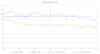
Disagree again. The interchange cap was introduced in 2014 and reduced to 90 in 2016. Scoring was declining throughout the 2000s slightly, but fell down noticeably after these two events:

1591947970945.png

The line is the previous lowest scoring year, before 2014 and after 1990. After 2014, no season has scored as highly as the previous seasons.

In fact between 2004 and 2013 when interchanges were at their highest, the average goals per team per game were 13.5. Since 2014 (and excluding 2020), the average has dropped by 1 goal. For the 2016 through 2019 seasons with the 90 interchange cap, we are down 1.2 goals per team per match compared to no interchange cap

For reference, the drop in scoring between 1994-2003 and 2004-2013 was just 0.3 goals per team per match.

Tiring players out reduced their ability to cover ground, but also reduces their speed and skills. This has led to lower scoring (more defensive) matches, as players are unable to cover ground but also unable to break away from ugly packs with speed or skill.
 
Last edited:
I disagree. The game was at its best with unlimited interchanges. Players were better able to utilize their skills because they were less tired, more able to show x-factor and we had fewer rolling mauls.

Part of the issue since introducing the interchange cap is the ball just bumbles around in packs, no one has the skill or execution to get it out. So much lazy hacking along the ground, illegal throws and so on. Remove the cap and get back to a focus on skills, which will only get worse if the cap is reduced.
No way the game was better with unlimited interchange.
In the unlimited interchange days Collingwood had a team of fast midfielders running around. It was boring football and a diverse collection of specialized positions were in danger of being eliminated from the game in favour of quick runners.
The problem with football is that players don't get tired enough now.
Tired players can't fall back on mass and help out their defense giving the forward an even chance if the ball is brought in quick.
A tired player also makes mistakes with their kicking.
The alternative is to kick to a contest and we might just get the high mark back.
The cream use to rise in the dying minutes of quarters by outworking their opponent with superior fitness but now a tired player gets interchanged.
Football now is played in large chunks to maintain possession by dissecting the gaps with precision kicking.
It's more like a game of soccer with short passing back and forth around the back to open up a gap. A mark is taken and then they reset.
If your tired that precision decreases and turnovers happen so that chipping style of football becomes less effective.
I personally would limit interchanges to 40 or less a game and welcome a return to moving the ball with speed and encouraging more contests not less.
 
No way the game was better with unlimited interchange.
In the unlimited interchange days Collingwood had a team of fast midfielders running around. It was boring football and a diverse collection of specialized positions were in danger of being eliminated from the game in favour of quick runners.
The problem with football is that players don't get tired enough now.
Tired players can't fall back on mass and help out their defense giving the forward an even chance if the ball is brought in quick.
A tired player also makes mistakes with their kicking.
The alternative is to kick to a contest and we might just get the high mark back.
The cream use to rise in the dying minutes of quarters by outworking their opponent with superior fitness but now a tired player gets interchanged.
Football now is played in large chunks to maintain possession by dissecting the gaps with precision kicking.
It's more like a game of soccer with short passing back and forth around the back to open up a gap. A mark is taken and then they reset.
If your tired that precision decreases and turnovers happen so that chipping style of football becomes less effective.
I personally would limit interchanges to 40 or less a game and welcome a return to moving the ball with speed and encouraging more contests not less.

But you can't move the ball with speed in the modern era if your players are cooked on the field. Skill errors would be through the roof, and burst speed would disappear from the game. Players would be encouraged to move the ball more slowly and retain more possession to avoid skill errors.

We are, in combination with the 6-6-6 rule, seeing more of that in modern football, whereas less of those things happened with unlimited interchanges.

In my opinion, tiring players makes them worse at football (this is generally common sense), and therefore makes the game worse
 

🥰 Love BigFooty? Join now for free.

Disagree again. The interchange cap was introduced in 2014 and reduced to 90 in 2016. Scoring was declining throughout the 2000s slightly, but fell down noticeably after these two events:

View attachment 891112

The line is the previous lowest scoring year, before 2014 and after 1990. After 2014, no season has scored as highly as the previous seasons.

In fact between 2004 and 2013 when interchanges were at their highest, the average goals per team per game were 13.5. Since 2014 (and excluding 2020), the average has dropped by 1 goal. For the 2016 through 2019 seasons with the 90 interchange cap, we are down 1.2 goals per team per match compared to no interchange cap

For reference, the drop in scoring between 1994-2003 and 2004-2013 was just 0.3 goals per team per match.

Tiring players out reduced their ability to cover ground, but also reduces their speed and skills. This has led to lower scoring (more defensive) matches, as players are unable to cover ground but also unable to break away from ugly packs with speed or skill.
Looking at that graph, the scoring was relatively steady until around 2008. Some years were better than others, which you'd expect, but on the whole they were varying around the average.

Then the coaches started using the bench tactically, and the scoring started to go down. It's been trending down since 2009, monotonically down over the last 4 years.

Massive increases to the interchange numbers created the problem. Capping the interchange numbers has done nothing to fix the problem - on that we can agree. My premise is that the failure is because they set the interchange cap far too high. Even 90 is far too high. My recommendation would be no more than 30, with a strong preference for 20 interchanges.

It's also fair to say that all of the AFL's rule changes, which were designed to improve the scoring rates, have been dismal failures. The 6-6-6 rule has arguably been the least effective rule change in the AFL's entire sordid history.
 
But you can't move the ball with speed in the modern era if your players are cooked on the field. Skill errors would be through the roof, and burst speed would disappear from the game. Players would be encouraged to move the ball more slowly and retain more possession to avoid skill errors.

We are, in combination with the 6-6-6 rule, seeing more of that in modern football, whereas less of those things happened with unlimited interchanges.

In my opinion, tiring players makes them worse at football (this is generally common sense), and therefore makes the game worse
I understand where you're coming from, but you're missing a fundamental point.

Allowing unlimited interchanges, or a high cap (e.g. 90), means that players remain fresher for longer. This means that they get to more contests, which means more players around the contest, creating the congested rugby scrums we see today. Further, they have the ability to run up & down the length of the field all day, ensuring that the forward lines are perpetually clogged unless the attacking team can move the ball quickly and cleanly.

Yes, they're able to execute their skills better when they're fresh, but it all turns into a turgid mess when the most skilled player on the ground is instantly mobbed by 5 opposition players as soon as he takes possession - instead of only having 1 or 2 players to evade if they weren't so fresh.

They used to have a saying about the end of games, when players were fatigued. Smaller players lose their leap, but tall players never lose their height. This is why quality KPPs were so valued back then, whereas today it's all about ability to gut run from one end of the ground to the other.
 
Status
Not open for further replies.

Remove this Banner Ad

🥰 Love BigFooty? Join now for free.

Back
Top