
Remove this Banner Ad

Christians are easily startled, but they'll soon be back. And in greater numbers 36:11

🥰 Love BigFooty? Join now for free.

Welcome to the Ask an Atheist thread II.

Previous part:


Standard board rules apply.
 
I disagree with the view that atheism is a hard conclusion while agnosticism is akin to being openminded and reasonable.

Agnosticism, god may or may not be real, is a failure to accept the null hypothesis. It's not a practical approach to the god hypothesis and people don't usually treat other issues with the same level of reasoning

When evidence for the existence of god is provided, I will accept god as being true. When evidence that the devil planted bones is provided, I will accept that claim as true. Compare that to theists who believe by faith alone; there's nothing that can falsify their belief. Agnostics are the type of people who will tell you they're not sure whether Essendon will win the 2026 AFL premiership. I can tell you the answer...we will!

Bertrand Russell:

"An atheist, like a Christian, holds that we can know whether or not there is a God.

The Christian holds that we can know there is a God; the atheist, that we can know there is not. The Agnostic suspends judgment, saying that there are not sufficient grounds either for affirmation or for denial."

The English biologist Thomas Henry Huxley coined the word 'agnostic' in 1869, and said:

"It simply means that a man shall not say he knows or believes that which he has no scientific grounds for professing to know or believe."

He also said.....

"Agnosticism, in fact, is not a creed, but a method, the essence of which lies in the rigorous application of a single principle ... Positively the principle may be expressed: In matters of the intellect, follow your reason as far as it will take you, without regard to any other consideration. And negatively: In matters of the intellect do not pretend that conclusions are certain which are not demonstrated or demonstrable."

A agnostic would say, "I cannot know whether a deity exists or not, and neither can you."
So an agnostic is a person who believes that nothing is known or can be known of the existence or nature of God.

There are of course various degrees of agnosticism.

Another agnostic might say: "I don't know whether any deity exists or not, and I don't care if any deity exists or not."

Yet another agnostic might say. "I don't know whether any deities exist or not, but maybe one day, if there is evidence, we can find something out."

Agnostics will treat, with considerable disbelief and incredulity, those who claim to definitely 'know' that there is a god or gods through their own 'experiences' or that they know the 'will' or 'form' of such a supernatural being through the reading of a 'Holy' text or other works.

In a similar frame, I'm also agnostic about whether there is an afterlife.

I see no credible evidence to support whether there is actually is an afterlife, so for the moment, I don't see why I should believe claims made by various people and texts that there definitely is an afterlife or what the nature of that afterlife entails.

But neither can I definitively say that there is absolutely no afterlife.

In other words "I cannot know whether there is an afterlife or not, and neither can you." As such, any claim by anybody that there is such a state, will be met with scepticism. (which of course means 'doubt as to the truth of something').
 
Last edited:
I disagree. This is not what a null hypothesis is.

It depends on what YOU set the null hypothesis to. If it is H0: Christianity IS true. The Bible is LITERALLY true. The earth is 6000 years old and creation occurred in 6 days as given in Genesis, then you have a very easy task to reject H0 due to the massive overwhelming evidence against.

If on the other hand H0 is a deistic God exists, it's IMPOSSIBLE to disprove. One could argue that the alternative H(a) of no God is a better model because it requires fewer assumptions so supports Occams Razor. But it's obviously not the same strength of counter that we have in case 1. Since god(s) are not falsifiable, you cannot have potential falsifications, which is what without a null hypothesis will not exist.

Btw, null hypothesis gets thrown around quite a lot here, this does not apply here: here's why

Definitions:

"The null hypothesis is that any experimentally observed difference is due to chance alone, and an underlying causative relationship does not exist," - Wikipedia

"The null hypothesis is a typical statistical theory which suggests that no statistical relationship and significance exists in a set of given single observed variable, between two sets of observed data and measured phenomena" - Science Direct.

Applying this to the existence of God seems odd. What is our dataset? What are we measuring statistically and comparing it to what (like we don't have 2 universes to companre it with, we only have 1, like one with deity the other without)? "Does god exist" is not a statistical process.


Here's Gemini AI

View attachment 2484367

Also consider everything you do requires certain axiomatic assumptions. Philosophical arguments, logical arguments, scientific and the historical method are not immune from this. Your logical conclusion is based on YOUR axiomic assumptions, it's NOT a default position.

Hence atheism is illogical, just like theism.

The example i provided about consciousness being non-local, if true, changes the whole perspective about how we view the world. QM does a great job at that already. Anything and everything is on the table.
A hypothesis like the god hypothesis or a deistic god cannot be the null hypothesis. The null hypothesis is the default scientific position when there's insufficient evidence to support a hypothesis (for example the existence of god).

How would you test it? That depends how you define 'god'. If god is defined as the god of the torah/bible/koran, then prayer studies are a good means of doing so. Statistical significance at the 95% level is a reasonable benchmark, especially if results from the study can be independently replicated.

Evaluating prophecies and claims of miracles is another means of doing so. I'm pretty openminded if the reasoning is strong, but it's rare to see a claim from theists that amounts to more than fallacious reasoning and confirmation bias.

Your view is different, I understand that. I don't have the knowledge and expertise to evaluate your claims tbh. Are they widely accepted by those with knowledge and scientific understanding on the topic?
 
Bertrand Russell:

"An atheist, like a Christian, holds that we can know whether or not there is a God.

The Christian holds that we can know there is a God; the atheist, that we can know there is not. The Agnostic suspends judgment, saying that there are not sufficient grounds either for affirmation or for denial."

The English biologist Thomas Henry Huxley coined the word 'agnostic' in 1869, and said:

"It simply means that a man shall not say he knows or believes that which he has no scientific grounds for professing to know or believe."

He also said.....

"Agnosticism, in fact, is not a creed, but a method, the essence of which lies in the rigorous application of a single principle ... Positively the principle may be expressed: In matters of the intellect, follow your reason as far as it will take you, without regard to any other consideration. And negatively: In matters of the intellect do not pretend that conclusions are certain which are not demonstrated or demonstrable."

A agnostic would say, "I cannot know whether a deity exists or not, and neither can you."
So an agnostic is a person who believes that nothing is known or can be known of the existence or nature of God.

There are of course various degrees of agnosticism.

Another agnostic might say: "I don't know whether any deity exists or not, and I don't care if any deity exists or not."

Yet another agnostic might say. "I don't know whether any deities exist or not, but maybe one day, if there is evidence, we can find something out."

Agnostics will treat, with considerable disbelief and incredulity, those who claim to definitely 'know' that there is a god or gods through their own 'experiences' or that they know the 'will' or 'form' of such a supernatural being through the reading of a 'Holy' text or other works.

In a similar frame, I'm also agnostic about whether there is an afterlife.

I see no credible evidence to support whether there is actually is an afterlife, so for the moment, I don't see why I should believe claims made by various people and texts that there definitely is an afterlife or what the nature of that afterlife entails.

But neither can I definitively say that there is absolutely no afterlife.

In other words "I cannot know whether there is an afterlife or not, and neither can you." As such, any claim by anybody that there is such a state, will be met with scepticism. (which of course means 'doubt as to the truth of something').
If nothing can be known about the existence or nature of god, why do you accept the god hypothesis as valid?

An atheist doesn't necessarily hold to the view that there can't be a god, it's merely disbelief in the claim that 'god is real'. God could be real, unicorns could be real, the invisible dragon that lives in my garage could be real. I'll accept the existence of any of those when objective evidence is provided...until then, it's impractical to be agnostic about any of them imho.

Are you agnostic about the theory of evolution?
 
If nothing can be known about the existence or nature of god, why do you accept the god hypothesis as valid?

I don't accept any hypothesis as correct / valid, until there is supporting evidence confirming its' truth / validity .

An atheist doesn't necessarily hold to the view that there can't be a god, it's merely disbelief in the claim that 'god is real'.

As does an agnostic. Given there is no supporting evidence for such.
God could be real, unicorns could be real, the invisible dragon that lives in my garage could be real.

Yep. But nonetheless in the absence of any supporting evidence, I see no reason to accept any of those claims as true.

I'll accept the existence of any of those when objective evidence is provided...until then, it's impractical to be agnostic about any of them imho.

An agnostic is a person who believes that nothing is known or can be known of the existence or nature of God.

Nothing can be known about an afterlife or the existence of other universes (the multiverse) beyond this one, beyond speculation. The latter idea is supported by theoretical physics, but remains unproven.

Scientists debate whether the multiverse is a scientific theory or merely a philosophical notion, similar to the notion of 'god', which is considered by many to just being a philosophical notion. So at the moment, on the matter of the multiverse, I'll also remain agnostic.
Are you agnostic about the theory of evolution?

Should I be?

Quite apart from the fact that evolution has nothing to do as to whether there is a some sort of supernatural deity or not, there is a great deal of supporting empirical evidence in support of the scientific theory of evolution.

Evolution and its current accepted explanatory model is a well-substantiated explanation and/or model of some aspect of the natural world/universe, based on a body of facts that have been repeatedly confirmed through observation AND experiment. (i.e. empirical evidence).

Hence I accept that the current model of evolution, as agreed to by the consensus of scientists across a number of scientific fields, is most likely true.
 

Log in to remove this Banner Ad

How would you test it? That depends how you define 'god'. If god is defined as the god of the torah/bible/koran, then prayer studies are a good means of doing so. Statistical significance at the 95% level is a reasonable benchmark, especially if results from the study can be independently replicated.
Agreed, this is why i said, if you are talking about the god of the Bible, Koran, sure.


Evaluating prophecies and claims of miracles is another means of doing so. I'm pretty openminded if the reasoning is strong, but it's rare to see a claim from theists that amounts to more than fallacious reasoning and confirmation bias.
Sure, i never disagreed, this is the god that religion 'claims' to be the truth.


Your view is different, I understand that. I don't have the knowledge and expertise to evaluate your claims tbh. Are they widely accepted by those with knowledge and scientific understanding on the topic?
My view isn't different at all. I am saying subjective evidence can be vital if it can be replicated by another person under same conditions. Sam Harris and Roger Penrose has heaps of material on this topic. It's the hottest topic in neuroscience right now. I cannot meditate for you, you have to meditate yourself. Hence these results can only be studied in terms of brain waves and functions which already gave us extraordinary results. How would you want to quantify such a thing that cannot be quantified? Subjective evidence in terms of talking to Jesus, allah creating miracles etc i don't disagree with you, these are all riddled with confirmation bias.

Hence my agnosticism. If consciousness is not tied to the brain and is fundamental like Bohrs, Penrose, Harris etc theorised then anything and everything we know is pretty limited and everything is on the table. Anything is possible and this is science. I am not talking gibberish religious language and making outrageous claims.
 
Last edited:
I don't accept any hypothesis as correct / valid, until there is supporting evidence confirming its' truth / validity .
A hypothesis can be valid or scientifically justifiable before being tested. Once tested, the hypothesis is either accepted or rejected based on evaluation of the evidence.

Do you agree that theists have provided no objective evidence for the god hypothesis?
As does an agnostic. Given there is no supporting evidence for such.
How do you define 'god'?
Yep. But nonetheless in the absence of any supporting evidence, I see no reason to accept any of those claims as true.
Do you reject my claim that an invisible dragon lives in my garage or remain openminded?
An agnostic is a person who believes that nothing is known or can be known of the existence or nature of God.
If I claim that an elephant lives in your bedroom, you'd reasonably expect to see evidence for it. Absence of evidence is evidence of absence in that case.

A god would leave a larger footprint than an elephant, would it not?
Nothing can be known about an afterlife or the existence of other universes (the multiverse) beyond this one, beyond speculation. The latter idea is supported by theoretical physics, but remains unproven.
There's no scientifically justifiable reason to believe in an afterlife (afaik), not even on a theoretical basis.
Scientists debate whether the multiverse is a scientific theory or merely a philosophical notion, similar to the notion of 'god', which is considered by many to just being a philosophical notion. So at the moment, on the matter of the multiverse, I'll also remain agnostic.
Is there anything you are gnostic about?
Should I be?
A scientific theory remains falsifiable. How can you be sure the devil didn't plant evidence to fool unbelievers?
Quite apart from the fact that evolution has nothing to do as to whether there is a some sort of supernatural deity or not, there is a great deal of supporting empirical evidence in support of the scientific theory of evolution.

Evolution and its current accepted explanatory model is a well-substantiated explanation and/or model of some aspect of the natural world/universe, based on a body of facts that have been repeatedly confirmed through observation AND experiment. (i.e. empirical evidence).

Hence I accept that the current model of evolution, as agreed to by the consensus of scientists across a number of scientific fields, is most likely true.
Extrapolate that form of reasoning to every area of life and you'll understand why atheism is the only logical conclusion.

The crux of an agnostics argument is that we can't prove whether or not a deity is responsible for lighting and thunder, so Zeus might be real.
 
A hypothesis can be valid or scientifically justifiable before being tested. Once tested, the hypothesis is either accepted or rejected based on evaluation of the evidence.

Hypotheses are educated guesses certainly derived from prior observations, existing theories, and scientific evidence.
Do you agree that theists have provided no objective evidence for the god hypothesis?

Stephen Meyer argues that scientific findings in cosmology, physics, and biology point to a theistic creator, but that's more pseudo-science and his reasoning and argument, I don't accept.
How do you define 'god'?

It's not my responsibility to define 'god'. I'm not making a claim there is a god. Or there isn't a god. Seeing you know there is definitely no 'god', what do you mean by the term 'god'?
Do you reject my claim that an invisible dragon lives in my garage or remain openminded?

I see no evidence to support such a claim, so until such evidence is presented then I am skeptical of your claim and will live my life accordingly, whether or not I visit your garage.
If I claim that an elephant lives in your bedroom, you'd reasonably expect to see evidence for it. Absence of evidence is evidence of absence in that case.

I see no evidence to support such a claim, so until such evidence is presented then I am skeptical of your claim. I will use my bedroom in the normal manner, as said elephant has no discernible impact on my current use of said bedroom.
A god would leave a larger footprint than an elephant, would it not?

Would it?
There's no scientifically justifiable reason to believe in an afterlife (afaik), not even on a theoretical basis.

I certainly see no reason to believe that there is an afterlife and no way of telling until after my departure from this life.

Is there anything you are gnostic about?

That which is supported by empirical evidence.
A scientific theory remains falsifiable. How can you be sure the devil didn't plant evidence to fool unbelievers?

I don't know the 'devil' exists in the first place, so I have no way of knowing if it 'planted evidence'. Hence I really don't take into account that possibility.

Extrapolate that form of reasoning to every area of life and you'll understand why atheism is the only logical conclusion.

Being skeptical about god in the absence of supporting evidence for the existence of such a concept is not just confined to atheism.

The crux of an agnostics argument is that we can't prove whether or not a deity is responsible for lighting and thunder, so Zeus might be real.

Some have claimed in the past (and maybe even the present) that Zeus exists and is the cause of storms. But this is also a claim with no supporting evidence. Hence I tend to be skeptical of such a claim.
 
Last edited:
It's not my responsibility to define 'god'. I'm not making a claim there is a god. Or there isn't a god. Seeing you know there is definitely no 'god', what do you mean by the term 'god'?
Oh, but it is.

I don't believe in any gods, as opposed to claiming there is no god. You claim to be agnostic about 'god'. Who or what are you agnostic about?
 
Oh, but it is.

No. It is not.

I'm not making any claim about the nature or the existence of god. I am merely responding to claims about god made by others. Usually by asking something similar to "How do you know that?" Whatever is claimed about whatever is meant by god I cannot disprove. But neither can anyone else prove the claim they are making about 'god'.
I don't believe in any gods, as opposed to claiming there is no god.

I see no evidence for whatever 'god' is. But neither do I claim there is no god or gods. I merely do not believe any claims made by people as the nature or existence of whatever they mean by 'god'. The reason for that is the lack of supporting evidence.
You claim to be agnostic about 'god'. Who or what are you agnostic about?

I've made that clear. I cannot disprove god. I have no supporting evidence to suppose there is a god.

Bertrand Russell:

"An atheist, like a Christian, holds that we can know whether or not there is a God.

Thomas Henry Huxley said about agnosticism

"It simply means that a man shall not say he knows or believes that which he has no scientific grounds for professing to know or believe."

"Agnosticism, in fact, is not a creed, but a method, the essence of which lies in the rigorous application of a single principle ... Positively the principle may be expressed: In matters of the intellect, follow your reason as far as it will take you, without regard to any other consideration. And negatively: In matters of the intellect do not pretend that conclusions are certain which are not demonstrated or demonstrable."


A agnostic would say, "I cannot know whether a deity exists or not, and neither can you." So an agnostic is a person who believes that nothing is known or can be known of the existence or nature of God.
 
Last edited:
No. It is not.

I'm not making any claim about the nature or the existence of god. I am merely responding to claims about god made by others. Usually by asking something similar to "How do you know that?" Whatever is claimed about whatever is meant by god I cannot disprove. But neither can anyone else prove the claim they are making about 'god'.


I see no evidence for whatever 'god' is. But neither do I claim there is no god or gods. I merely do not believe any claims made by people as the nature or existence of whatever they mean by 'god'. The reason for that is the lack of supporting evidence.


I've made that clear. I cannot disprove god. I have no supporting evidence to suppose there is a god.

Bertrand Russell:

"An atheist, like a Christian, holds that we can know whether or not there is a God.

Thomas Henry Huxley said about agnosticism

"It simply means that a man shall not say he knows or believes that which he has no scientific grounds for professing to know or believe."

"Agnosticism, in fact, is not a creed, but a method, the essence of which lies in the rigorous application of a single principle ... Positively the principle may be expressed: In matters of the intellect, follow your reason as far as it will take you, without regard to any other consideration. And negatively: In matters of the intellect do not pretend that conclusions are certain which are not demonstrated or demonstrable."


A agnostic would say, "I cannot know whether a deity exists or not, and neither can you." So an agnostic is a person who believes that nothing is known or can be known of the existence or nature of God.
That doesn't address my question.

How are you defining the term 'god' that you're agnostic about?
 
That doesn't address my question.

How are you defining the term 'god' that you're agnostic about?
I have no idea how to define 'god'. That's up to those making claims about 'god'.

I'm making no claim about the existence or nature of 'god'.
 
How do you define 'god'?
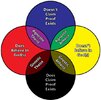
You need to share your definition of Atheist and Agnostic. Because you seem to agree with much of the agnostic position, while attributing it to atheism.


Theists claim there is evidence that proves the existence and nature of God. That God exists.
Atheist claim there is evidence that proves the non-existence of God, heavily based on their view of the nature of a God and it's impacts. That God does not exist.

Agnostics do not support either claim. Agnostics don't make a claim, because their belief is that nothing is known or can be known of the existence or nature of God.
 
You need to share your definition of Atheist and Agnostic. Because you seem to agree with much of the agnostic position, while attributing it to atheism.


Theists claim there is evidence that proves the existence and nature of God. That God exists.
Atheist claim there is evidence that proves the non-existence of God, heavily based on their view of the nature of a God and it's impacts. That God does not exist.

Agnostics do not support either claim. Agnostics don't make a claim, because their belief is that nothing is known or can be known of the existence or nature of God.
theism-atheism-gnosticism-agnosticism-1232305172.jpg
 

Remove this Banner Ad

A hypothesis can be valid or scientifically justifiable before being tested. Once tested, the hypothesis is either accepted or rejected based on evaluation of the evidence.

Do you agree that theists have provided no objective evidence for the god hypothesis?

How do you define 'god'?

Do you reject my claim that an invisible dragon lives in my garage or remain openminded?

If I claim that an elephant lives in your bedroom, you'd reasonably expect to see evidence for it. Absence of evidence is evidence of absence in that case.

A god would leave a larger footprint than an elephant, would it not?

There's no scientifically justifiable reason to believe in an afterlife (afaik), not even on a theoretical basis.

Is there anything you are gnostic about?

A scientific theory remains falsifiable. How can you be sure the devil didn't plant evidence to fool unbelievers?

Extrapolate that form of reasoning to every area of life and you'll understand why atheism is the only logical conclusion.

The crux of an agnostics argument is that we can't prove whether or not a deity is responsible for lighting and thunder, so Zeus might be real.
I thought it was that agnostics along with everyone tips their cap to the concept of the uncasable
A hypothesis can be valid or scientifically justifiable before being tested. Once tested, the hypothesis is either accepted or rejected based on evaluation of the evidence.

Do you agree that theists have provided no objective evidence for the god hypothesis?

How do you define 'god'?

Do you reject my claim that an invisible dragon lives in my garage or remain openminded?

If I claim that an elephant lives in your bedroom, you'd reasonably expect to see evidence for it. Absence of evidence is evidence of absence in that case.

A god would leave a larger footprint than an elephant, would it not?

There's no scientifically justifiable reason to believe in an afterlife (afaik), not even on a theoretical basis.

Is there anything you are gnostic about?

A scientific theory remains falsifiable. How can you be sure the devil didn't plant evidence to fool unbelievers?

Extrapolate that form of reasoning to every area of life and you'll understand why atheism is the only logical conclusion.

The crux of an agnostics argument is that we can't prove whether or not a deity is responsible for lighting and thunder, so Zeus might be real.
I see agnostics as those who have simply tipped their hat toward the concept of the uncaused cause and having no real negative experience of theism continue to think that all bets are still on.
While atheists… especially on this thread have had a negative experience with theism …ranging from the horrific to just simply the whole thing grinding their gears and are pretty dam sure because of their personal experience that theism is just bunk.
 
Last edited:
I thought it was that agnostics along with everyone tips their cap to the concept of the uncasable

I see agnostics as those who have simply tipped their hat toward the concept of the uncaused cause and having no real negative experience of theism continue to think that all bets are still on.
While atheists… especially on this thread have had a negative experience with theism …ranging from the horrific to just simply the whole thing grinding their gears and are pretty dam sure because of their personal experience that theism is just bunk.
I suspect the agnostics that post here are more intelligent than you give them credit for.
 
I thought it was that agnostics along with everyone tips their cap to the concept of the uncasable

I see agnostics as those who have simply tipped their hat toward the concept of the uncaused cause and having no real negative experience of theism continue to think that all bets are still on.
While atheists… especially on this thread have had a negative experience with theism …ranging from the horrific to just simply the whole thing grinding their gears and are pretty dam sure because of their personal experience that theism is just bunk.
Fairy tales and wishful thinking aren't. Religion has been created by men to explain what cannot be explained. For example, YWH was the storm god of a pantheon of gods in the isreael/palestine area. Eventually, YWH became more important, and the others less important, until he became the only god.

Also, the bible took stories and doctrines from older or nearby religions.
 
I found out some new things about Christianity this week due to the Immaculate Conception of Mary being celebrated by a holy day in many countries. Not only was Jesus born to a virgin but his mother was conceived free from original sin. Declared dogma in 1854.

Sounds legit.
Mary is revered in the catholic church but catholic women can never hope to reach her level...because she is both a virgin and a mother. (although recent medical procedures might have bypassed this)

I came upon that opinion some years after I was old enough to dump christianity. I wish that I knew it in my early teen years because it might have explained the good girl/bad girl catholics that I got to know in those years.
 

🥰 Love BigFooty? Join now for free.

A lot of religious believers incorrectly make the assumption that there is no such thing as secular spirituality; that the only alternative to religious spirituality is crass materialism.

Discuss.
Actually, I’ll refine that. A lot of religious believers don’t necessarily make that assumption, but they find it convenient to give that impression.
 

Remove this Banner Ad

Christians are easily startled, but they'll soon be back. And in greater numbers 36:11

🥰 Love BigFooty? Join now for free.

Back
Top